
Wedding Fireworks Packages for Your Venue and Celebration
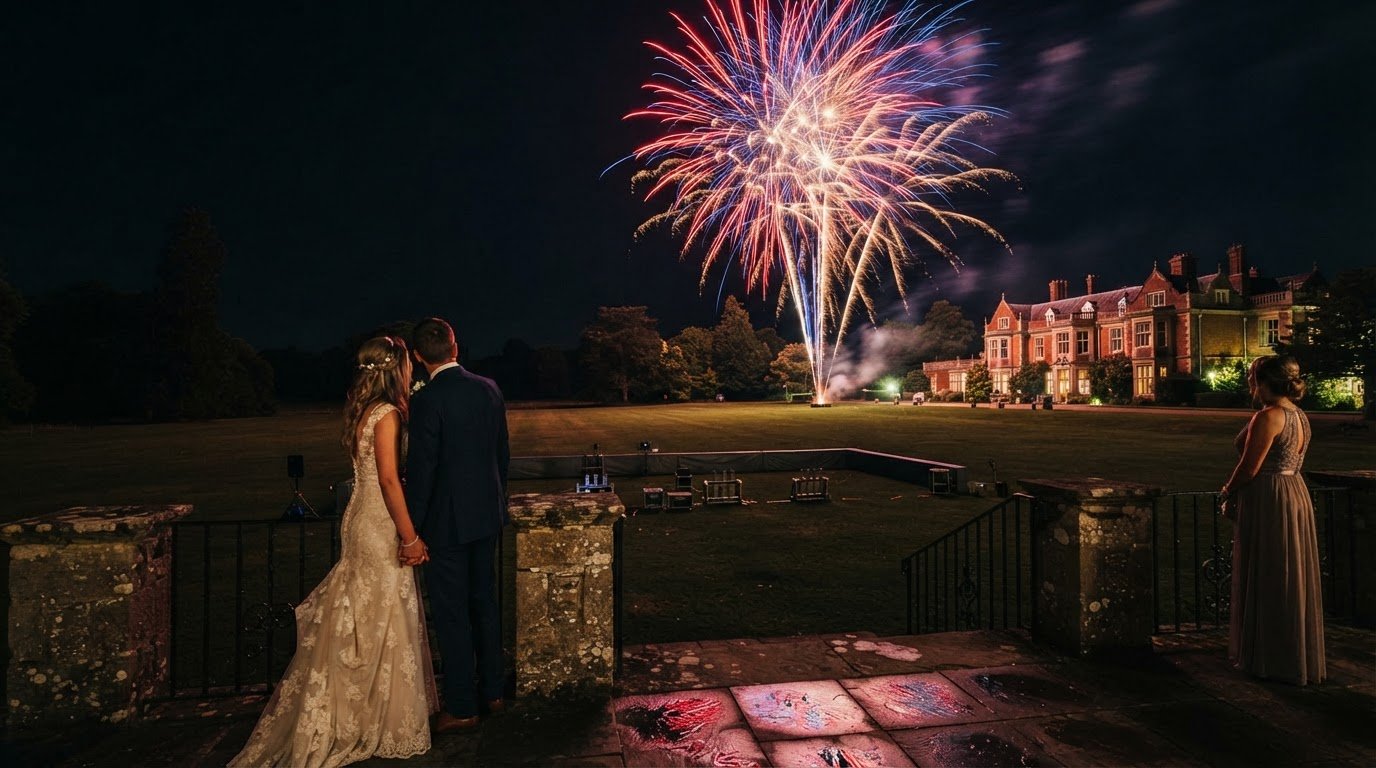
A wedding fireworks display is a venue decision before it is a fireworks decision. Book as soon as your venue and date are confirmed, ideally at least six months ahead, especially for a peak-season celebration. Professional wedding fireworks packages can simplify planning, but the display must suit the venue, its permissions and your guests.
It is natural to focus first on the finale: the colours, scale and shared moment beneath the night sky. The practical choice between a professional display and DIY fireworks matters just as much. This guide explains venue approval, insurance and safety planning, how low-noise options can help at noise-sensitive venues, and what to weigh when comparing professional and DIY approaches. You will be better prepared to decide when to book and which details to settle before choosing a display for your celebration.
Key Takeaways
- Build the display schedule around darkness and local restrictions; in London, fireworks generally cannot be set off after 11pm, with some exceptions, according to the Greater London Authority.
- Clarify the venue’s fireworks policy and the documents it requires, including any risk assessment and public liability insurance.
- Choose a low-noise display if sound is a concern for your venue or guests, while keeping the sense of occasion in the visual design.
- Weigh the convenience of a professional display against the planning and safety responsibilities involved in a DIY approach.
- Explore how different barrage options can shape the scale and rhythm of a wedding display.
How far in advance should I book a wedding firework display?
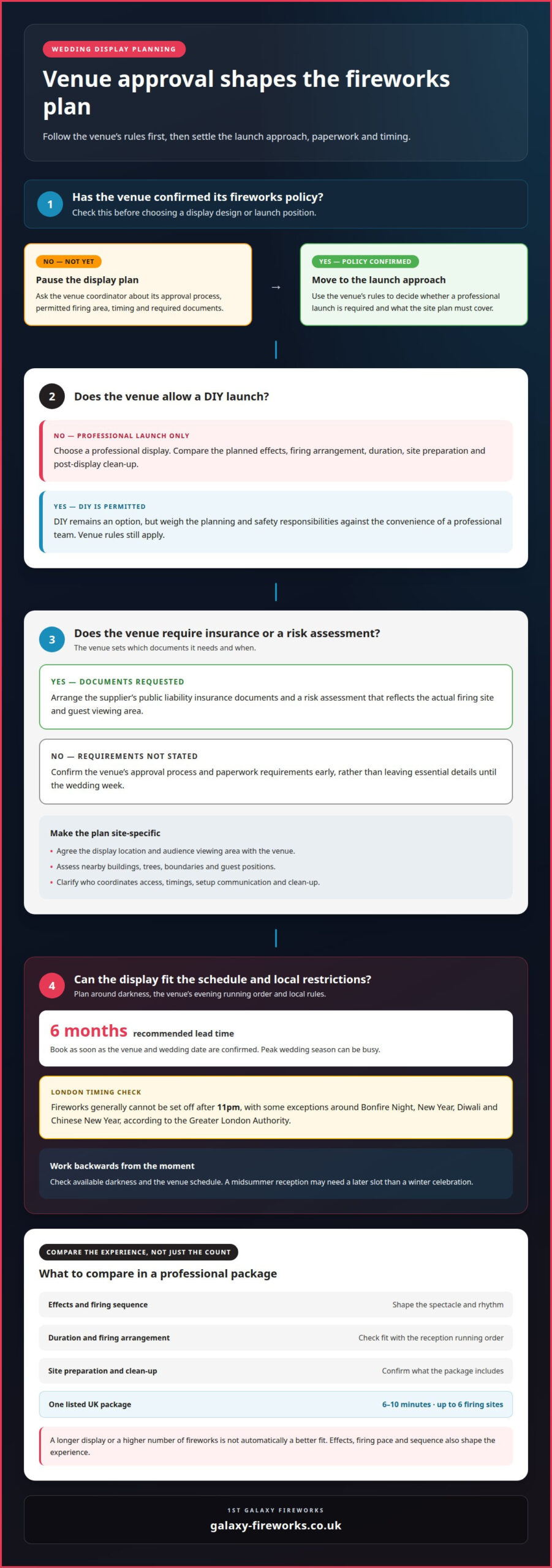
Book as soon as your venue and wedding date are confirmed. Six months ahead is the recommended lead time for a professional display, allowing time to plan the site, agree the schedule and secure a suitable date. Peak wedding season can be busy, so planning early gives you more room to shape the display around your celebration.
For a London wedding, the finish time needs particular attention: fireworks generally cannot be set off after 11pm, with some exceptions around Bonfire Night, New Year, Diwali and Chinese New Year, according to the Greater London Authority. Work backwards from the venue’s evening schedule and the available darkness. A midsummer reception, for example, may need a later slot than a winter celebration.
Professional wedding fireworks packages vary in format and scale. Compare the planned effects, firing arrangement, display duration, site preparation and post-display clean-up. Reviews can help you understand other guests’ experiences, but look for relevant detail about timing, coordination and the event itself rather than relying on a rating alone. Package options are useful when their inclusions fit your venue and running order.
A professional display commonly includes the fireworks and a planned firing sequence, with appropriate insurance. The display company can also liaise with the venue, arrange a site survey and organise clean-up. Venues may request public liability insurance and a risk assessment, so establish their requirements early. This gives the display team time to plan around the site and venue rules, rather than leaving essential details until the wedding week.
This can include notifying the police, local authority, neighbouring landowners, nearby aerodromes, hospitals and fire service. A professional display offers a more managed approach, particularly when the venue expects specialist launch arrangements or requires insurance and risk-assessment documents. The right choice depends on the venue’s policy and how much responsibility you want to take on.
There is no single starting price for every professional display: the design, effects, site conditions and operational requirements all shape the cost. Bespoke elements or add-ons can change the specification, so identify essential features before comparing proposals. A longer display is not automatically a better fit; a carefully timed sequence may suit the reception more effectively. If funding larger entertainment features requires reviewing your overall wedding budget, options such as homeowner loans UK can provide property owners with practical borrowing solutions for major event expenses.
For duration, one listed UK package runs for 6–10 minutes and can use up to 6 firing sites. The number of fireworks is not a reliable measure of spectacle on its own: effects, firing pace and sequence also shape the display, so compare the planned experience rather than count alone.
Venue permissions, insurance and risk assessments
Venue approval shapes the display plan, from the firing position to guest access. Establish the venue’s policy early, then align the site plan and paperwork with its requirements.
Venue permissions and risk assessments
A venue may permit fireworks only when a professional company launches them. Its policy can affect the available firing area, display timing and whether a proposed design is suitable. A risk assessment records site hazards and how the display team will manage them. The venue’s event coordinator can explain its approval process and required documents.
A site survey connects those documents to the actual grounds. The display team can assess the launch area, nearby buildings, trees, boundaries and guest viewing positions. For example, a lawn beside a car park may need a different layout from an open field. The assessment should reflect the proposed firing position and viewing area, not just a generic description of the venue.
- Agree the display location and audience viewing area with the venue.
- Share the venue’s fireworks policy and document requirements with the display team.
- Set out who coordinates access, timings and post-display clean-up.
Clear roles help prevent last-minute gaps. The venue manages its event arrangements, while the display team plans the firing setup and the controls in its risk assessment. If the venue restricts a location or timing, that information can guide changes before the wedding schedule is finalised.
Supplier insurance and staff training
Wedding venues may require public liability insurance and a risk assessment before approving a display. Public liability insurance relates to claims involving injury or property damage; it does not replace site-specific planning. The venue’s requirements determine which documents it needs and when. Set a clear handover point so the coordinator receives the paperwork before final event planning.
Staff training matters because the display depends on people following the agreed setup and operating plan. A professional team should understand its assigned roles and the site layout, and keep guests outside designated working areas. The risk assessment should reflect those arrangements. For example, the person overseeing the firing area needs a clear way to coordinate with colleagues and the venue’s event team.
- Provide the venue with the supplier’s insurance documents when requested.
- Make sure the risk assessment reflects the agreed firing site and guest area.
- Confirm who communicates with the venue during setup and before firing.
These checks give the venue a practical basis for approval and help keep the display plan connected to the celebration’s layout. For details on wedding firework displays, explore the options available for your event.
Booking offer and promotional extras
A booking offer is useful only when its inclusions suit the celebration. Compare the planned display, firing arrangement and extras as one complete proposal. A headline offer may look generous but leave important elements outside its scope. Ask for a written breakdown that separates the core display from optional additions, so you can judge what each contributes.
Start with the moment you want to create. A single-song display, for example, can coordinate fireworks with a chosen piece of music, while a broader sequence can build towards a finale. Treat each as a distinct design, not simply a smaller or larger version. Consider whether the format suits the reception schedule, venue layout and atmosphere you want.
Duration is one practical comparison point. One listed Prestige package runs for 6–10 minutes and can use up to 6 firing sites. Those details show why a package description needs more than a label: firing locations and sequence affect how the show fills the available space. Compare the stated duration and layout against the actual proposal, rather than assuming every package offers the same experience.
Promotional extras may include additional design elements, music coordination or another service component. Their value depends on whether they change the display in a way guests will notice. Ask for each extra to be named in the written offer, with its purpose and any effect on timing or setup explained. If an offer bundles several elements, request a clear distinction between included features and optional upgrades.
- Display: note the format, sequence and stated duration.
- Site: record how many firing locations the proposal uses.
- Extras: list each addition and what it changes.
- Schedule: align the proposed running time with the reception plan.
Use that comparison to assess value, not just the number of extras. A couple planning a short evening slot may prefer a focused sequence over add-ons that extend the programme. A larger venue may benefit from a layout using more than one firing position, if the site plan allows it. The best fit is the offer whose features address a real planning need.
Before accepting a booking offer, put the agreed format, duration, firing sites and extras in writing. This gives you and the venue a shared reference when coordinating the display. It also makes later changes easier to identify: if the music choice or schedule shifts, you can see which parts of the original proposal need updating.
Low-noise wedding fireworks
A low-noise display can suit a venue near homes or a celebration with noise-sensitive guests. Include sound in the planning from the first design discussion, rather than treating it as an afterthought. Explain the concern clearly, such as whether nearby residents, young children or animals are part of the venue’s surroundings. That context can help shape a display around both visual impact and sound.
“Low-noise” means a sound-conscious brief, not a promise of silence. Fireworks still make noise, so agree what the term means for the proposed display. Ask which parts of the sequence can be adapted and how that will affect the overall effect. The aim is a memorable moment that respects the setting, not an assumption that every firework will be quiet.
Consider the venue and guest experience together. A historic garden beside neighbouring properties presents different sound concerns from a remote, open site. At a reception with noise-sensitive guests, the couple might choose a shorter, visually focused sequence, then position the audience at a suitable viewing point. The display team can discuss a quiet firework display and how its design can deliver colour and movement with sound in mind.
Use these steps to make the brief practical:
- Describe the venue setting, including nearby homes and noise-sensitive areas.
- Tell the display team which guests or surroundings raise sound concerns.
- Ask how the proposed sequence balances visual effects and noise.
- Agree the display timing and viewing position with the venue.
Timing also affects how guests experience the display. A sudden start during speeches or a quiet dinner can be more disruptive than a planned transition after the meal. Build the display into the running order and tell the event team when it will begin. A clear announcement before the first effect gives guests time to prepare or move indoors.
Low-noise options suit celebrations where sound needs careful consideration, but the right design depends on the venue and audience. Compare the proposed sequence, not just its label: ask what the display will look and sound like, how it fits the schedule, and whether the venue’s surroundings are reflected in the plan. If it lasts several minutes, agree how its pacing will hold attention while preserving the quieter atmosphere you want.
The decision is a balance: preserve the visual finale while recognising the venue’s sound sensitivities. Put the agreed approach in the display plan so the venue and event team share the same expectations. A thoughtful brief gives the fireworks team clear direction for creating a celebration that feels spectacular without making volume the main event.
Professional versus DIY wedding fireworks
The choice is about more than the finale. A professional display puts design and firing in the hands of a specialist team, while DIY leaves more practical responsibility with the couple or organiser. Start with the venue’s policy, then consider who will manage the display alongside the wedding schedule. If the venue allows only professional launches, DIY is not suitable for that site.
DIY can appeal to couples who want hands-on control over product selection and sequence. It also means organising the setup, managing the launch area and fitting the activity around guests, speeches and the reception. Imagine a wedding where the best launch space is beyond the dining lawn: the organiser must plan access and keep the audience away from the working area.
A professional display is often the more straightforward fit when the venue expects specialist coordination or you want an experienced team to handle the firing. The display can be planned around the site and event running order, helping the venue and organiser coordinate the transition from reception to viewing. You will still need to agree permissions and arrangements with the venue.
Compare the two routes against these practical questions:
- Venue: does its fireworks policy allow DIY, professional firing, or only one approach?
- Responsibility: who will plan the setup, manage the launch and coordinate with the event team?
- Schedule: can the display fit around speeches, dinner and the planned finale?
- Guests: who will guide people to the viewing area and keep the launch zone clear?
Timing can make the decision clearer. In London, for example, fireworks generally cannot be set off after 11pm, with some exceptions around Bonfire Night, New Year, Diwali and Chinese New Year, according to the Greater London Authority. A couple planning a late reception should build that limit into the event schedule before choosing DIY or professional support.
DIY is most practical when the venue allows it and the organiser can take responsibility for planning and coordination. A professional display is a stronger fit when the venue requires a professional launch or you want specialists to manage the firing. Choose neither route on spectacle alone: the venue’s rules, available space and organiser’s capacity all matter.
Before deciding, write down who handles each task, from venue coordination to the final guest announcement. If you want a specialist team to plan and deliver the display, explore professional wedding fireworks for your celebration.
1St Galaxy Fireworks: Wedding Fireworks
1st Galaxy Fireworks offers Wedding Fireworks for couples planning a memorable celebration. Turn to this option when you want fireworks to form part of the evening’s programme, rather than manage a DIY display yourself.
The display can be considered alongside individual firework categories, including Single Ignition Barrages, Pro Barrages and Cake Barrages. These give you different formats to discuss when shaping the kind of finale that suits your event. Your venue, preferred timing and sound considerations can help guide the choice.
Before deciding, bring together the details already established in your plans: the confirmed venue and date, its fireworks policy, intended display time and any noise sensitivities. This gives your conversation a practical starting point and helps connect your celebration’s needs with a suitable display.
If you’re ready to discuss Wedding Fireworks for your celebration, contact 1st Galaxy Fireworks.
Shape a finale that feels like your celebration
The strongest display is not simply the biggest. It reflects the mood you want guests to remember, whether that means a vivid burst of colour, a musical moment or a graceful close to the evening. Before making your final choice, picture the last scene: where guests will be, what they will see and how the display should feel alongside the rest of your celebration.
That vision gives your planning conversation a useful starting point. Consider whether you want a professionally planned display or are weighing product options for a different approach. 1st Galaxy Fireworks offers Wedding Fireworks, alongside Single Ignition Barrages, Pro Barrages and Cake Barrages. These categories provide distinct directions to explore when shaping a display around your event.
Use your preferred atmosphere as the guide, then discuss how the professional wedding fireworks packages available can suit that vision. A clear idea of the moment you want to create makes the next decision more focused.
Contact 1st Galaxy Fireworks to discuss a display for your celebration, and take the next step towards a brilliant wedding finale.
Frequently Asked Questions
Can I request specific colours or effects for my firework display?
Yes, you can describe the colours and effects you would like the display to feature. For example, you might choose a palette that complements your flowers or venue décor. The design also needs to suit the available firing area and audience position. Share your preferences as part of the brief, then consider how the proposed sequence brings them together rather than treating each effect as a separate request.
How much does it cost?
The cost depends on the display design and practical requirements, rather than one standard price for every wedding. A sequence with particular effects, a longer running time or a more complex site layout may differ from a simpler plan. To compare options, look at what each proposal includes, such as its format, duration and firing arrangement. This gives you a clearer like-for-like basis than headline descriptions alone.
How much space do I need?
A professional display ideally needs an open area at least the size of a football pitch. Usable space matters more than the venue’s total acreage: buildings, trees, boundaries and guest viewing positions can affect the firing layout. For example, a large estate may still have limited suitable ground if its open lawn is close to structures. A site survey helps determine whether the proposed area can accommodate the display safely.
What happens if it rains?
Rain does not necessarily prevent a display, but the site and conditions matter. High wind is the weather condition identified as seriously threatening a firework display, because it can affect planned firing and viewing arrangements. The display team considers conditions alongside the site plan and operational safety. If the weather changes, safe operation should take priority over preserving the original schedule at any cost.
How much do wedding fireworks displays cost in the UK?
There is no single UK-wide price for every wedding display. The design, duration, effects, firing positions and site requirements all influence the proposal. DIY fireworks and a professionally planned display are different comparisons: one involves product selection and organiser-led preparation, while the other is a display service. Compare the same details across proposals, including what is included, rather than treating duration alone as a measure of value.
What types of wedding fireworks displays are available, such as low-noise or indoor options?
Wedding displays can be designed with different visual styles and sound considerations. Low-noise displays are an option for noise-sensitive venues or guests, though “low-noise” does not mean silent. Indoor fireworks are a separate format from outdoor displays and depend on the venue and suitable products. The setting, ceiling and audience arrangement affect whether an indoor effect is appropriate, so the format must be planned for the specific space.
What licences, permits, and insurance must a UK wedding fireworks company have?
There is no single paperwork checklist for every wedding site. Venues may require public liability insurance and a risk assessment before approving a display. The documents address different matters: insurance concerns liability, while the assessment records site hazards and planned controls. Venue approval is also distinct from any local permissions that may apply. Establish the site’s requirements and the display team’s documentation early in planning.
What UK laws restrict fireworks display times, noise, and public safety?
Fireworks may generally be used between 7am and 11pm on any day, with later exceptions until 12am on Guy Fawkes Night and 1am on New Year’s Eve, Christmas, Chinese New Year and Diwali. In London, fireworks generally cannot be set off after 11pm, with some exceptions around Bonfire Night, New Year, Diwali and Chinese New Year, according to the Greater London Authority. Venue rules and safe audience arrangements also affect planning.
