Best Fireworks for Small Garden Displays: The 2026 Safety & Selection Checklist
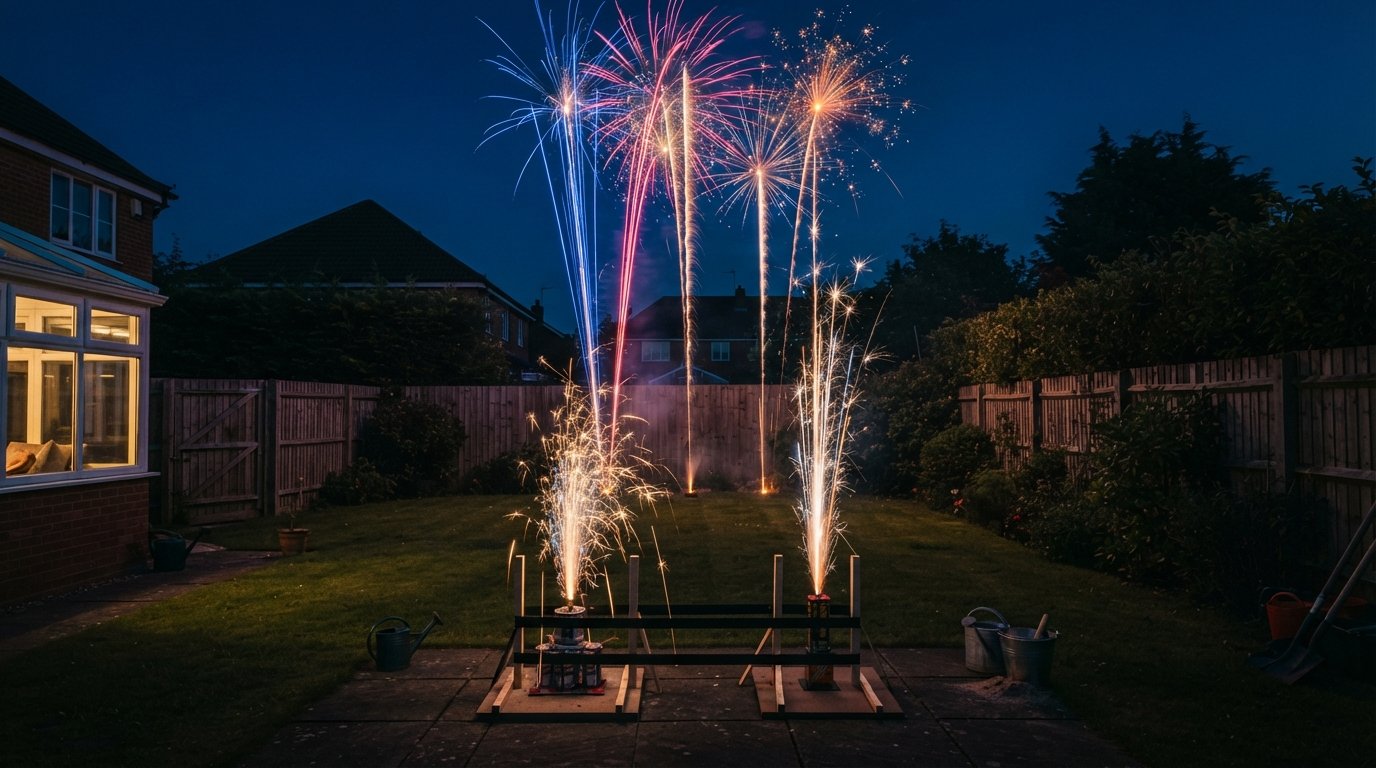
What if orchestrating an unforgettable pyrotechnic display has nothing to do with raw explosive volume, and everything to do with vertical trajectory control? Choosing the best fireworks for small garden plots isn’t about buying the loudest box on the shelf; it is about discovering refined Category F2 selections that produce breathtaking colour and choreography without showering your neighbours’ timber fences or guttering in hot fallout.
If you are working with a compact eight-metre boundary, you’ve probably shared the familiar anxiety of deciphering statutory packaging labels, worrying about unstable ground cakes toppling mid-sequence, or distressing nearby pets. It is completely natural to hesitate when living space feels tight, but you shouldn’t have to sacrifice genuine wonder to keep everyone safe.
This 2026 checklist provides everything you need to verify your exact lawn measurements against UK legal standards, pinpoint low-debris aerial effects, and securely rig your firing site for a flawless, stress-free display.
Key Takeaways
- Verify your lawn boundaries against UK pyrotechnic standards to ensure your setup strictly honours the mandatory eight-metre Category F2 safety buffer.
- Discover why vertical-firing cakes and multi-tiered fountains rank as the best fireworks for small garden displays, maximising visual colour without debris drift.
- Pinpoint high-risk items to exclude from confined layouts, particularly stick rockets and wide-angle fan barrages that endanger neighbouring roofs and fences.
- Master professional ground-rigging techniques using wooden stakes and secure tape to eliminate cake recoil and prevent toppling during ignition.
- Eliminate selection guesswork by choosing curated Category F2 display packs engineered specifically for consistent safety and seamless timing in domestic spaces.
The Small Garden Fireworks Safety Checklist: Distances and UK Regulations
Selecting the best fireworks for small garden settings requires a clear understanding of UK pyrotechnic law. Every retail firework sold in Great Britain must comply with British Standard BS EN 15947, carrying valid UKCA or CE markings. These strict standards govern device stability, fuse burn times, and mandatory spectator separation distances to protect suburban homes from stray sparks.
Understanding Category F2 vs Category F3 Safety Classifications
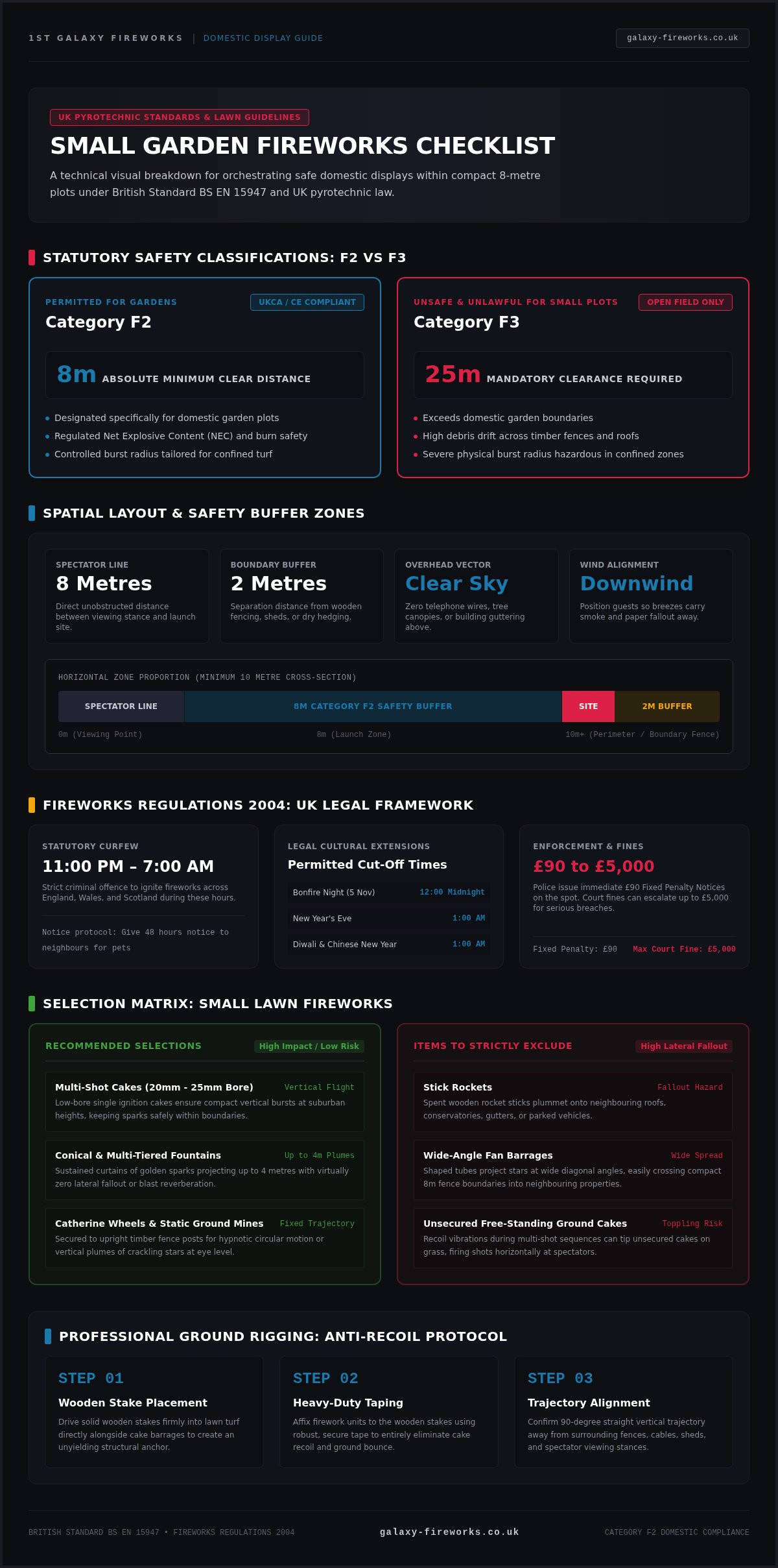
All consumer fireworks fall into distinct hazard tiers. Category F2 items are designated specifically for domestic gardens, requiring an absolute minimum spectator clearance of 8 metres. In contrast, Category F3 pieces demand at least 25 metres of open ground. Firing an F3 barrage within a modest plot is both unsafe and unlawful, as the physical burst radius and falling debris exceed typical boundary lines. Before buying, check packaging labels for both the category marking and the Net Explosive Content (NEC). You can read more about standard consumer fireworks classifications and devices to understand how different chemical charges dictate these statutory boundaries.
Measuring Your Garden Firing Zone and Spectator Clearance
Most retailers state that an eight-metre tape measure is enough, but seasoned display planners account for the entire boundary environment. Establishing a secure firing site requires an audit of both horizontal space and vertical hazards:
- Spectator Line: Measure from the closest viewing position to the launch zone, confirming at least 8 metres of unobstructed turf.
- Boundary Buffer: Maintain at least 2 metres of clearance between your fireworks and wooden fencing, sheds, or dry hedging.
- Overhead Check: Ensure firing tubes point directly into open sky, well away from telephone cables, gutters, or mature tree canopies.
- Wind Direction: Position guests so prevailing breezes carry smoke and harmless paper fallout away from their viewing stance.
Legal Curfews, Permissions, and Neighbour Etiquette Across the UK
Under the Fireworks Regulations 2004, setting off fireworks between 11:00 pm and 7:00 am is a criminal offence throughout England, Wales, and Scotland. Police can issue immediate £90 Fixed Penalty Notices, with statutory court fines reaching up to £5,000 for serious breaches. Curfews extend only on specific cultural celebrations:
- Bonfire Night (5 November): Permitted until 12:00 midnight.
- New Year’s Eve, Diwali, and Chinese New Year: Permitted until 1:00 am the following morning.
A successful evening relies on community consideration. Give immediate neighbours forty-eight hours of notice so pet owners can settle animals indoors, ensuring the best fireworks for small garden spaces bring genuine delight rather than local friction.
Essential Fireworks for Small Gardens: Effects That Deliver Maximum Visual Impact
Confined spaces don’t mean underwhelming displays; they simply demand intelligent effect layering. In compact plots, solid brick masonry and close boundary walls act as acoustic echo chambers, magnifying heavy concussive thuds into harsh reverberations. Selecting the best fireworks for small garden lawns comes down to choosing straight-vertical trajectories and rich visual choreography over raw acoustic power.
Fountains, Catherine Wheels, and Mines for Ground-Level Wonder
Conical fountains serve as an exceptional visual foundation, projecting sustained curtains of golden sparks up to four metres high with virtually zero lateral fallout. Mounting a Catherine wheel securely to an upright timber fence post introduces hypnotic circular motion, while static ground mines erupt into vivid vertical plumes of crackling stars. Layering these low-level effects keeps spectators entranced at eye level while preserving clear airspace overhead.
Compact Single Ignition Barrages and Low-Bore Multi-Shot Cakes
For aerial spectacle without the hassle of lighting multiple individual pieces, compact multi-shot cakes are unbeatable. Look for cake barrages engineered with 20mm to 25mm bore diameters. These modest tube sizes maintain tidy, vertical flight paths that burst at sensible suburban altitudes, keeping hot embers safely inside your boundaries. You can explore our detailed guide on single ignition barrage options to see how these units produce pre-timed, professional sequences from one lighting point.
Low-Noise Fireworks for Pet-Friendly Urban Celebrations
While the statutory ceiling for consumer pyro sits at 120 decibels under official UK fireworks regulations on GOV.UK, enclosed courtyards benefit immensely from low-noise lines operating around 75 to 85 dB. Swap aggressive titanium salutes for graceful falling leaves, spinning comet tails, and sweeping horsetail willows. These compositions prioritise radiant colour and gentle hang-time over sharp acoustic cracks, keeping local pets calm whilst delivering pure theatrical elegance.
Pairing an initial eruption of ground fountains with a vertical low-noise cake creates a balanced, multi-tiered performance. If you want expert assistance matching bore sizes to your exact boundary measurements, explore the curated ranges at galaxy-fireworks.co.uk to build a tailored display with total confidence.
Fireworks to Avoid in Confined Spaces: The Danger Checklist
Curating an exceptional domestic display requires knowing what to leave on the shelf. While large retail outlets often market their entire catalogue under one broad umbrella, many items are downright dangerous when restricted to domestic plots. Securing the best fireworks for small garden plots depends as much on firm exclusions as it does on thoughtful selections.
Why Traditional Rockets Present Hazards in Compact Gardens
Stick rockets remain a classic seasonal favourite, but they are entirely unsuitable for confined spaces. A rocket motor arcs across the sky under heavy influence from thermal wind currents, making flight trajectories notoriously unpredictable. Once the payload bursts overhead, gravity pulls the solid wooden stick and spent plastic motor casing straight back down. In an urban setting, falling rocket debris routinely punctures greenhouse glass, damages conservatory roofs, or wedges smouldering card into neighbours’ plastic guttering. Vertical multi-shot cakes deliver identical aerial bursts with none of this uncontrolled descending fallout.
Fan Barrages Versus Straight-Firing Vertical Tubes
Cakes are divided into two primary firing geometries: straight-firing and fan-shaped (angled). Fan cakes tilt their internal tubes outward in V-shaped, W-shaped, or sweeping Z-patterns, firing pyrotechnic stars at angles up to 45 degrees. When ignited within narrow boundary fences, these angled projectiles will easily strike overhanging tree limbs, clip outbuildings, or burst directly over neighbouring property lines. Always inspect the carton graphics before buying to verify that every tube fires straight vertically into unobstructed airspace, in line with official HSE guidance on organising firework displays.
Acoustic Overpressure and Sound Amplification Hazards
Confined spaces amplify sound waves. High-calibre titanium flash salutes generate sharp concussive overpressure that reflects between patio walls, timber fencing, and double-glazed windows. At close spectator distances, these acoustic shockwaves produce unpleasant physical reverberation rather than theatrical delight. To keep family and neighbours comfortable, exclude erratic ground chasers and deafening flash bangers:
- Ground Spinners and Chasers: Erratic spinning discs lack directional control and bounce dangerously off brick borders or garden furniture.
- Category F3 Heavy Barrages: Massive display units possess blast radiuses that overwhelm domestic garden perimeters.
- High-Decibel Salutes: Pure acoustic bangers that cause acute distress to pets within adjacent brick-built homes.
The best fireworks for small garden environments always trade deafening concussion for rich visual elegance.
Step-by-Step Small Garden Firing Plan: Rigging, Securing, and Lighting
Flawless execution turns great pyrotechnics into an unforgettable evening. Even the best fireworks for small garden spaces will underperform or cause genuine hazards if they aren’t anchored properly against recoil. Setting up a disciplined firing line guarantees that every tube discharges straight upward while you remain fully in control.
Securing Cakes and Fountains to Prevent Toppling
Multi-shot cakes generate sharp downward kickback as each internal tube fires. On soft autumn lawns, this recoil can tilt an unsecured cake sideways, directing subsequent shots horizontally towards spectators or fences. To prevent this, drive a solid wooden survey stake into the turf directly beside each firework. Secure the casing to the timber batten using weather-resistant duct tape, keeping the stake on the side opposite the fuse. For fountains fired over stone patio slabs or gravel where stakes won’t penetrate, glue or tape the units onto a wide timber board or wedge them firmly between heavy masonry bricks.
Structuring Your Garden Running Order for Dramatic Pacing
Choreographing a smooth running order prevents dead air and builds anticipation:
- Opening Act: Begin at ground level with crackling fountains or a glowing Catherine wheel to cast warm ambient light across the lawn.
- Mid-Display Build: Introduce steady Roman candle volleys, lifting colour into the sky and drawing spectator eyes upward.
- The Finale: Conclude with a punchy, straight-firing single ignition barrage that fills the vertical airspace with multi-layered bursts.
Safety Essentials, Emergency Buckets, and Fuse Protocol
Never rely on standard cigarette lighters, which force your hands and face dangerously close to the tubes. Use pyrotechnic portfires or extended safety tapers, lighting fuses at arm’s length while standing to the side. Keep two metal buckets of water and a bucket of sand stationed beside the firing line at all times. If a firework fails to ignite or stops mid-performance, wait a full fifteen minutes before approaching, and never attempt to relight a dud. After the show, submerge all spent cakes and misfires in a water bucket for forty-eight hours to inert chemical lift charges before household disposal.
Ready to build a reliable display for your lawn? Browse professional-grade Category F2 selections and order your home garden display packs at galaxy-fireworks.co.uk today.
Selecting Curated Display Packs and Expert Pyrotechnics for Small Spaces
Many off-the-shelf supermarket selection boxes disappoint because they bundle cheap plastic novelties alongside items with mismatched firing distances. Searching for the best fireworks for small garden lawns should never involve guessing whether an individual piece demands eight metres or twenty-five. Choosing a coordinated package engineered strictly around Category F2 parameters guarantees that every barrage, fountain, and Roman candle shares identical safety clearances.
The Advantage of Coordinated Garden Display Packs
Curated kits eliminate the disjointed pacing that plagues casual home displays. Specialist pyrotechnicians design these bundles to balance effect heights, burning durations, and vibrant colour palettes from start to finish. Premier manufacturers like Britannia Fireworks excel at packing rich visual chemistry into modest calibres, giving you intense golden brocades and crimson falling leaves without reckless noise. To compare vetted assortments that remove the guesswork, explore our detailed breakdown of firework display packs tailored for domestic lawns.
Post-Display Disposal and Garden Clean-Up Routine
Responsible firing extends to the morning after. Never rush to handle warm cardboard casings immediately following your finale; allow the tubes to cool down completely overnight. Once the structure is cold to the touch, saturate the spent units thoroughly with a garden hose to extinguish any remaining embers deep inside the firing chambers. Fully soaked, deactivated cardboard tubes can then be bagged and placed straight into your standard household refuse collection according to local authority rules.
Trusting 1st Galaxy Fireworks for Your Garden Celebrations
Backing your celebration with experienced guidance makes all the difference. With over thirty years of professional display production and retail pyrotechnic expertise, the team at 1st Galaxy Fireworks tests and selects only high-grade Category F2 consumer pieces that deliver genuine spectacle within limited boundaries. Take advantage of fully licensed nationwide delivery across Britain, and be sure to organise your supply well ahead of Bonfire Night and New Year celebrations to secure the finest low-fallout barrages.
Transform Your Lawn Into a Captivating Display Arena
A compact lawn doesn’t limit your creativity; it simply demands precision. When you prioritise vertical trajectories, secure mechanical staking, and low-debris Category F2 choreography, you protect neighbouring property while staging a truly memorable show. The best fireworks for small garden displays deliver rich, saturated colours and dynamic pacing without relying on ear-splitting concussion or sweeping fallout.
With over thirty years of professional display and consumer retail expertise, 1st Galaxy Fireworks takes the guesswork out of suburban pyrotechnics. As the home of premier lines including Britannia Fireworks and Jorge Fireworks, we provide curated, fully compliant garden cakes and fountains backed by dependable, licensed nationwide delivery straight to your door.
Ready to ignite your next celebration with complete peace of mind? Explore our Category F2 garden fireworks range at 1st Galaxy Fireworks and discover just how spectacular a well-planned home display can be.
Frequently Asked Questions
Can I legally set off fireworks in my back garden in the UK?
Yes, you can legally discharge fireworks on private property if you are aged eighteen or older and comply with national curfews. You don’t require a licence for domestic celebrations on your own land. However, you must stick strictly to consumer-grade items and prevent debris from falling dangerously into public highways or neighbouring spaces, which can attract on-the-spot police fines.
How much clearance distance do I need for Category F2 garden fireworks?
Category F2 items mandate a statutory minimum spectator separation distance of 8 metres from the launch point. In addition to this baseline measurement, you should factor in at least a two-metre buffer zone between firing tubes and timber boundaries or garden buildings. If your lawn cannot accommodate eight clear metres between guests and fireworks, the plot is unsuitable for aerial consumer pyro.
Are rockets safe to fire in a small residential garden?
No, stick rockets are unsafe for compact plots. Rockets rely on wind-sensitive flight trajectories and shed heavy wooden sticks and plastic motor casings that tumble uncontrolled back to earth. In suburban areas, this falling debris regularly smashes conservatory glass or scorches guttering. Straight-firing vertical cakes provide identical aerial bursts with predictable vertical fallout, making them the best fireworks for small garden layouts.
What happens if a firework fails to go off during a garden display?
Never approach a suspected dud firework immediately, and never attempt to relight a dormant fuse. Wait at least fifteen minutes to ensure the internal composition isn’t smouldering unseen. Once this cooling period passes, approach from the side, submerge the unit entirely in a bucket of cold water for forty-eight hours to inert the chemical charges, and dispose of it in household general waste.
Can I set off fireworks on artificial grass or timber garden decking?
You shouldn’t fire pyrotechnics directly from synthetic turf or wooden decking, as hot sparks and muzzle flash will quickly melt plastic fibres or scorch timber boards. Instead, lay down a broad, non-flammable base such as a concrete paving slab, a sheet of thick plywood, or a layer of sand. Anchor your cakes firmly to this platform using heavy masonry blocks.
What are the best low-noise fireworks for small gardens with nervous pets?
The best fireworks for small garden displays with nervous pets are low-noise fountains, spinning Catherine wheels, and quiet vertical barrages. Look for visual-first effects like falling leaves, horse-tail willows, and coloured comets. Operating between 75 and 85 decibels, these pyrotechnics deliver vibrant hues, hypnotic movement, and soft crackles without the concussive titanium flash bangs that distress dogs, cats, or young infants.
Is it legal to let off fireworks in a small garden after 11:00 pm?
Discharging fireworks after 11:00 pm is illegal across the UK, carrying potential on-the-spot police fines of £90 or court penalties up to £5,000. Statutory exemptions apply on Bonfire Night, when the cut-off moves to midnight, and on New Year’s Eve, Diwali, and Chinese New Year, when firing is permitted until 1:00 am the following morning. Scottish residents must also observe local control zones.