
Bengal Torches for Photography: Creative Effects and Safe Planning
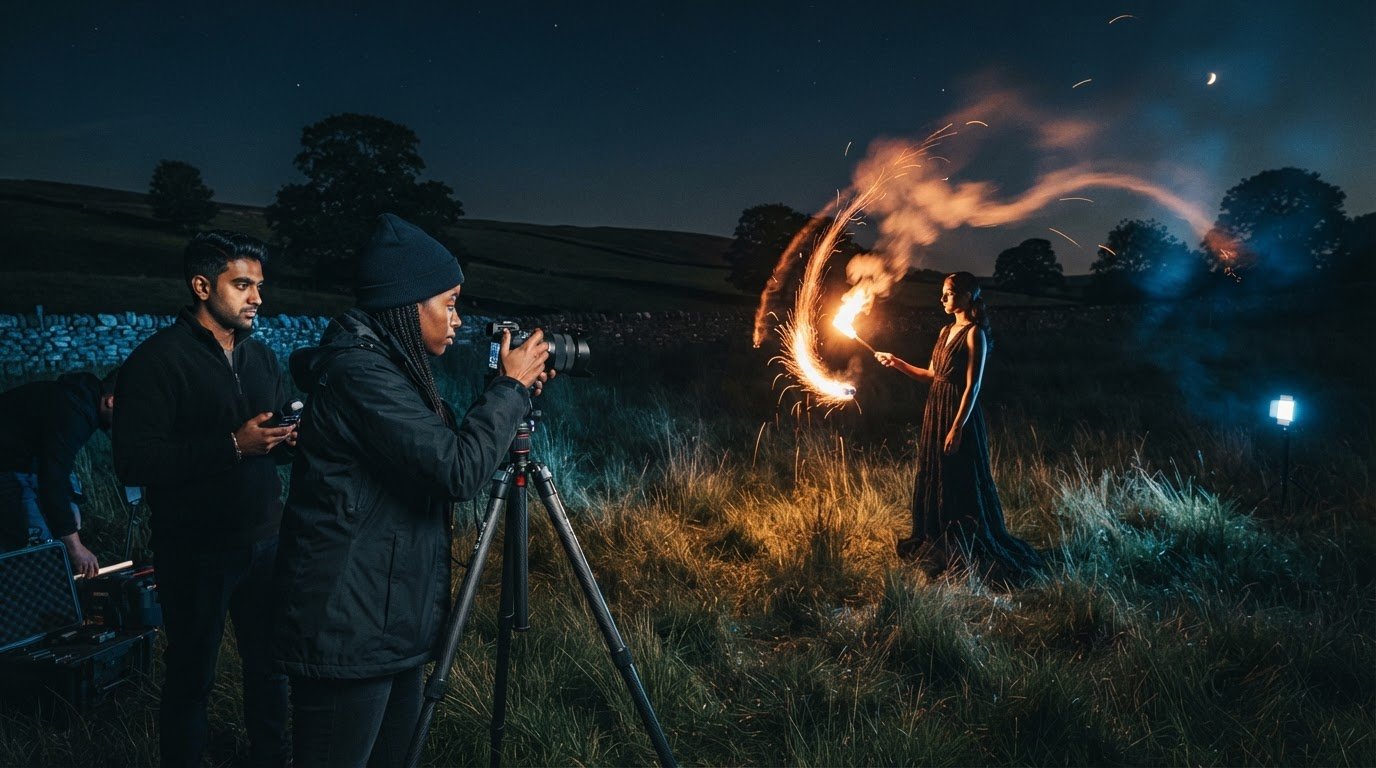
What if the brightest part of your photograph is also the part that needs the most planning? Bengal torches for photography can bring vivid flame, atmosphere and movement to a frame, but they’re pyrotechnic effects, not ordinary battery-powered torches. Flame and smoke can be difficult to predict, so the result depends on more than camera settings alone.
If you’re drawn to the drama but unsure how to manage the effect, start with a clear creative plan and a careful approach to the product, surroundings and people involved. A striking image depends on the setting and composition as much as on the effect itself.
This guide covers the visual possibilities and limitations of Bengal torches, how to plan a shoot around the setting and camera approach, and what to resolve before photography begins. That includes reading the manufacturer’s instructions, securing permissions and considering safety requirements in the UK. 1st Galaxy Fireworks offers Bengal torches and colour smoke pyro for planned displays and creative projects. Treat the pyrotechnic effect with respect, and build the photograph around it.
Key Takeaways
- Use bengal torches for photography as a deliberate part of the composition, such as a focal point, silhouette edge or background accent.
- Consider how changing conditions may affect smoke. It can add depth or soften a scene, but its appearance isn’t fully predictable.
- Match your creative aim to the effect described in the product instructions. Don’t assume every torch creates the same flame or smoke.
- Before the shoot, work through the product instructions, site conditions, shot plan and participant briefing in that order.
- Use current official safety guidance alongside the manufacturer’s instructions when deciding whether and how to proceed.
What are Bengal torches for photography, and how do they differ from camera torches?
Bengal torches for photography are pyrotechnic effects, not ordinary camera torches. Their visible effect becomes part of the image, rather than simply providing controllable illumination for the photographer or subject. Depending on the product, the effect may involve flame and associated smoke. These can create a bright focal point, strong contrast or atmosphere, but the appearance varies between products.
The term has a longer history than its modern photographic use. A Bengal light reference provides background on the name and its historical context. For any specific torch, its own labelling and instructions are the practical guide to its intended effect and characteristics.
Think of the torch as a creative element with limits, not a predictable studio lamp. The photograph depends on the product’s effect, the surroundings, ambient light and camera choices such as exposure and focus. A bright source may draw attention away from a face, while smoke, if produced, can look different as conditions change. Plan for variation instead of building the entire shot around an exact appearance.
Bengal torches versus ordinary torches and photographic lights
A rechargeable torch or hands-free photography lamp is designed to illuminate a scene or subject. Depending on its controls and output, it can help you see, frame or light a shot. A Bengal torch is a pyrotechnic effect intended for visual impact, not routine, adjustable illumination. The two aren’t interchangeable, so don’t rely on a pyrotechnic effect to do the job of a photographic light.
This distinction matters when planning a shot. If the subject needs consistent illumination, plan for that separately from the effect you want in the frame. A camera light and a pyrotechnic element serve different creative roles. Using both in one image doesn’t make their behaviour or handling equivalent.
What photographers may want from a Bengal torch effect
Photographers may use a flame as a compositional point, a bright edge against a darker subject or an accent in the background. Where a product’s instructions describe a smoke effect, smoke may add atmosphere or create visible depth between foreground and background. Neither flame nor smoke should be treated as a guaranteed colour, shape or duration. Product details and conditions affect what appears in the photograph.
Start with the story the image should tell. A dramatic portrait, event photograph and stylised fashion image each call for a different visual balance. Consider whether the effect supports the subject or competes with it, and whether the setting suits the shoot brief. Then read the specific product instructions before making creative assumptions. The effect, setting and camera approach need to work together, with the product’s stated use taking priority over an imagined shot.
How do Bengal torches change the look of a photograph?
A Bengal torch can make light part of the subject, rather than simply a tool for illuminating it. In a darker composition, its bright point may draw the eye, outline a silhouette or add an accent behind the main subject. Depending on what surrounds it and how you frame it, the effect can feel dramatic, intimate or atmospheric.
Smoke, if the specific product produces it, may add a visible layer between the subject and background. It can suggest depth or soften the scene, but its appearance changes with the surroundings and ambient conditions. Don’t assume it will form a particular shape or stay in a chosen place. Check the product description and instructions to understand its stated effect before shaping the composition around it.
Flame creates the highlight, smoke may shape the space, and ambient light determines how both sit within the image. There’s no single exposure setting for every shot. A bright effect can lose detail if highlights are overexposed, while a darker setting may leave the subject difficult to see. Choose camera settings in response to the effect, available light, movement and creative brief.
Composition ideas for flame and smoke
Give the effect room in the frame. A clear subject against a relatively uncluttered background makes the relationship between person and light easier to read. If the effect sits prominently in the composition, it may become a focal point. Framed farther away, it can work as a smaller accent. These are visual choices, not instructions to alter safe handling distances.
Before the shoot, settle on a safe, planned position and test the composition without an active effect. Check the edges of the background, where the subject will look and whether other light sources distract from the intended focal point. For pyrotechnic photography in the UK, follow the product instructions and consult current official UK safety guidance. If the site or event has its own requirements, include them in the plan before the shoot.
Exposure, focus and colour: practical camera considerations
Take test frames in the planned setting before introducing the effect. Review the highlights to see whether the brightest areas retain detail, check that focus is on the intended subject and assess whether white balance keeps skin and surrounding colours natural. If the effect or subject moves, focus and shutter choices may need to change. There isn’t one recommended exposure for every camera, product or scene.
Review images between shots rather than assuming the first frame has worked. Small adjustments to framing, focus or exposure may better balance the effect with the subject, provided they don’t require anyone to approach or handle a pyrotechnic unsafely. Treat bengal torches for photography as a creative element within a carefully planned image, not a dependable replacement for controllable photographic lighting. For shoots exploring this kind of visual effect, 1st Galaxy Fireworks offers Bengal torches and colour smoke pyro as part of its fireworks range.
Which Bengal torch effect suits your photography idea?
Choose by working backwards from the photograph. What should the viewer notice first? What atmosphere suits the subject? What can the setting accommodate? A flame-led image and a smoke-led image can serve different creative aims, but compare those effects only when the product description and instructions support them. The packaging and instructions for a specific product, not a general label or another product’s specifications, determine its intended effect.
Choose for the intended image and a safe setting, not appearance alone. Use this comparison to shape the brief, then match it to the product information and site plan.
| Creative aim | Setting and subject | Planning considerations |
|---|---|---|
| Flame-led portrait | A subject framed against a background that keeps the effect visually distinct. | Decide whether the light should read as a focal point, an edge or a background accent. Keep the subject’s expression and the image’s mood central. |
| Smoke-led portrait or staged scene | A setting where the product’s stated smoke effect can contribute to the intended composition. | Plan for the appearance to depend on conditions. Don’t assume a particular colour, spread or pattern unless the product information states it. |
| Event photograph | An organised setting with sightlines, audience presence and the event brief in mind. | Consider who needs a clear view, where participants and photographer will be, and whether the effect fits the agreed photography plan. |
| Creative sequence | A staged shoot with a defined subject, frame and visual progression. | Set the composition and sequence in advance. Make the pyrotechnic effect a planned part of the image, not an improvised addition. |
Match the visual effect to the scene
For portraits, consider how the background separates the subject from the effect and whether the mood should feel dramatic or restrained. For event imagery, account for sightlines and the event’s photography brief, not just the camera frame. In staged work, plan framing and sequence before introducing any pyrotechnic effect. Decide the photographer’s position and the effect’s role as part of the overall site plan.
When colour smoke may be a better photographic choice
Where product instructions describe a smoke effect, it may contribute a visible layer or backdrop, rather than the bright point of interest sought from a flame-led image. That can make smoke suitable for a brief built around atmosphere or colour in the frame. Read the product’s stated effects carefully. Don’t infer a particular shade or output from the category name. The same principle applies to all bengal torches for photography: choose only after matching the documented effect to the image and setting.
Before settling on an option, compare the creative brief with the product description, subject and practical conditions at the site. If any part of the plan doesn’t fit the effect’s stated use, rethink the shot instead of relying on an assumed result. This keeps the choice deliberate and connects the image concept to responsible planning.
How to plan Bengal torch photography safely and responsibly
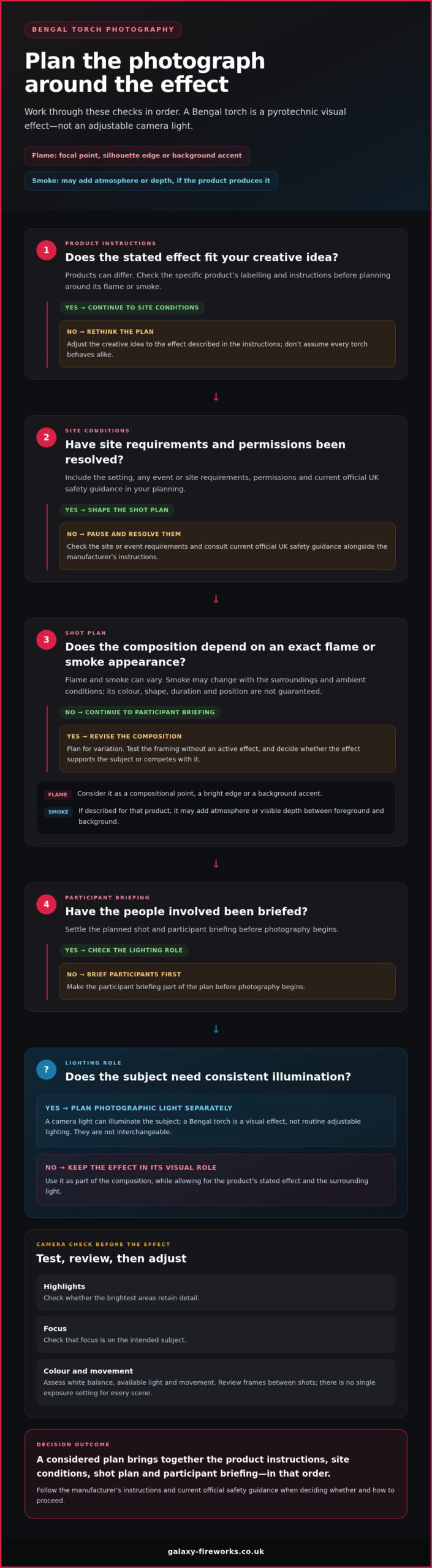
A strong photograph starts with a sound plan, not with ignition. Treat the pyrotechnic effect as one part of a managed shoot, with the product instructions and current official guidance taking precedence over general photography advice. UK rules and permission requirements can depend on the product, location and circumstances, so establish what applies to your specific shoot before setting a date or inviting participants.
Use this sequence to organise the planning:
- Read the product instructions. Understand the intended use, warnings and any stated safety area before deciding how the effect will fit the image. Don’t rely on assumptions drawn from another product.
- Assess the site. Consider the location, surroundings, access and whether the planned effect is suitable there. Confirm landowner or venue permission and any event requirements before the shoot.
- Plan the photograph. Set the composition, photographer’s position and sequence in advance, keeping the effect’s stated use in mind. Don’t make the shot depend on changing how the product is handled.
- Brief everyone involved. Explain who is responsible for operating the effect, where participants and equipment must remain, and what will happen if the plan needs to stop.
For UK legal and safety considerations, consult current official guidance relevant to the product and location. Don’t treat general online photography advice as a substitute. 1st Galaxy Fireworks’ Firework Safety Tips UK guide is a useful reference for safety planning alongside the instructions supplied with the product.
Check instructions, setting and permissions before the shoot
Follow the exact instructions and warnings for the product you intend to use. Before confirming the shoot plan, establish landowner or venue permission and find out whether the event has requirements affecting pyrotechnic effects or photography. If the location is public or shared, don’t assume that permission to take photographs also covers using an effect. Verify legal requirements through current official UK sources, as rules can vary with the circumstances.
Protect people, equipment and the shoot plan
Keep participants and equipment outside the safety area stated in the product instructions. Agree a clear route that people can use without moving into that area, and designate a responsible operator before the shoot begins. Decide in advance who can call a stop, and make stopping the plan an acceptable option if conditions or the setup change.
Don’t improvise handling, ignition or disposal procedures to capture a particular frame. Follow the product guidance for each, and build camera positions and shot timing around it. If the creative plan can’t be achieved within those instructions, change the shot rather than the safety arrangements. Once your plan is in place, explore Bengal torches from 1st Galaxy Fireworks as one option for a carefully planned photographic effect.
Explore Bengal torches for your photography plans with 1st Galaxy Fireworks
A successful pyrotechnic photograph begins with a clear idea and a realistic plan. Decide what the image needs, whether a flame or smoke effect fits the brief, and whether the setting and shoot arrangements support its use. Then read the specific product description and instructions before making decisions about framing or timing. Bengal torches for photography can add a striking visual element, but the actual result depends on the product and conditions. Treat the effect as part of the plan, not a guaranteed outcome.
1st Galaxy Fireworks is a UK fireworks retailer and professional display provider, with over 30 years of industry experience. Its range includes Bengal torches and colour smoke pyro alongside other fireworks. That specialist background offers a useful starting point for photographers considering a pyrotechnic effect as part of a planned image or event.
What to consider before choosing a Bengal torch
Begin with the intended image. Is the effect meant to draw the eye, shape the atmosphere or sit quietly within the composition? Next, think about the setting and subject. A portrait, event photograph and staged creative shoot each place different demands on the frame and the people involved. Let the brief guide the choice, rather than selecting a product on appearance alone.
Compare the descriptions and packaging of the products you’re considering. Don’t assume that effects, colours, duration or other characteristics are identical across a category. Use only information stated for that product, and follow its instructions when deciding whether it suits the image and planned setting. Before the shoot, settle the safe position, participant arrangements and shot sequence. If the creative idea depends on a use the instructions don’t support, revise the idea.
Find pyrotechnic effects for your photography brief
For some briefs, a flame-led element may suit the composition; for others, a product whose stated effect includes smoke may be a better visual choice. Neither is automatically right for every subject or location. The practical question is whether the documented effect suits the intended frame and whether the shoot can be organised around the product guidance. This keeps creative ambition connected to responsible use.
1st Galaxy Fireworks’ experience across consumer fireworks and professional displays sits alongside its Bengal torches and colour smoke pyro offerings. Photographers can explore pyrotechnic effects through a specialist fireworks retailer while keeping product instructions and shoot planning central to the decision.
Have a visual brief in mind? Browse Bengal torches from 1st Galaxy Fireworks and consider which documented effect best fits your planned image and setting.
Shape your next shoot around a considered effect
Before choosing an effect, write a brief that captures the feeling you want the final image to convey. Clear decisions about the subject, setting and visual role of the effect make it easier to compare product descriptions and keep the shoot focused. For bengal torches for photography, let the documented product characteristics and safe-use requirements shape the creative idea, rather than trying to make a product match an image it wasn’t intended to create.
This approach leaves room for striking results without treating them as guaranteed. Build the photograph around the setting, keep the instructions central to your plan, and be prepared to adapt the composition if conditions change. A carefully planned effect can support the story of an image while allowing safety to lead every decision.
1st Galaxy Fireworks brings more than 30 years of fireworks industry experience, with Bengal torches and colour smoke pyro available through its UK-wide online shop. Explore Bengal torches and colour smoke pyro to find an effect to consider for your photography plans.
Start with the image you want to create, then make every choice with care. Your next shoot can be both creative and thoughtfully planned.
Frequently Asked Questions
Can I photograph Bengal torches with a smartphone?
Yes, a smartphone can capture bright pyrotechnic effects, though the result depends on its camera and the scene. Take practice shots in similar lighting and check whether the phone is focusing on the subject or the bright effect. Avoid digital zoom if it noticeably softens the image, and move only within the position permitted by the product instructions. For a planned moment, check storage space and battery charge beforehand so you’re ready to shoot.
Can Bengal torches damage camera equipment?
Heat, sparks or residue may pose a risk to camera equipment, depending on the product and circumstances. Keep the camera, lens and accessories outside the safety area stated in the instructions, and compose the shot from that position. A filter, lens hood or protective cover doesn’t make it safe to move closer. If the product guidance doesn’t address a concern about your equipment, choose a more conservative setup rather than experimenting during the shoot.
What happens if a Bengal torch does not ignite as expected?
If a Bengal torch doesn’t ignite as expected, don’t try to relight, handle or investigate it by guesswork. Keep people clear in line with the product instructions and follow their exact guidance for what to do next. Any waiting time or disposal method must come from those instructions or applicable official guidance. Include a contingency in the shoot schedule, such as moving to another planned shot, so nobody feels rushed to approach the item.
Is smoke always visible in photographs of Bengal torches?
No, smoke isn’t guaranteed to show clearly in a photograph. Its visibility depends on whether that product produces smoke and on the background, lighting and conditions at the scene. For instance, smoke may be hard to distinguish against a pale backdrop. Side or back lighting can change how it reads in the frame, but don’t change how the product is used to chase a particular look. Review test images from the permitted position.
Can I use Bengal torches at a wedding or organised event?
It depends on the venue, event arrangements, product instructions and applicable requirements. Include the effect in the event plan early, then obtain the necessary permission before building it into the photography schedule. Coordinate with the organiser so guests, staff and equipment are accounted for, and follow current official guidance. Permission to take photographs doesn’t automatically mean pyrotechnics are permitted at the venue. If you are planning dramatic evening portraits for a celebration, collaborating with professionals like One Vision Photography | South Wales Wedding Photographer can help you coordinate creative visual ideas with venue rules and safe shot planning.
How can I keep the flame from overpowering a photograph?
Use test frames to judge how the flame sits alongside the subject, rather than relying on a fixed camera setting. Check whether bright areas lose detail and whether the subject remains the viewer’s focus. You could alter the framing so the flame has a supporting role, or choose a composition with more space around it. Make camera adjustments from your planned safe position, and don’t move closer or alter product use to control brightness.
