How to Put On a Firework Display: The Ultimate 2026 UK Guide
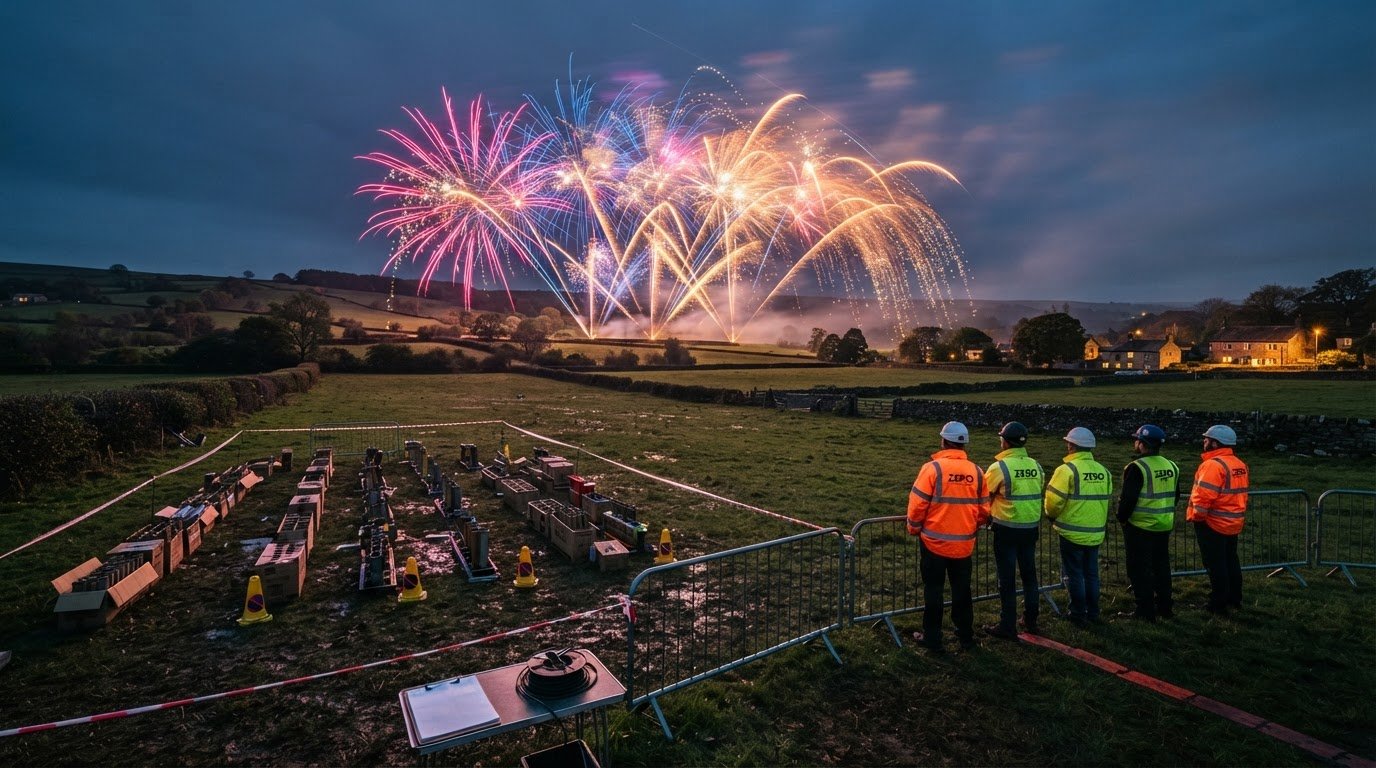
What if the secret to a professional-looking firework display isn’t bigger rockets, but a better plan? If you’re wondering how to put on a firework display, it’s natural to focus on the spectacular finale, whilst worrying about accidents, local rules or a firework that fails to fire. The strongest displays begin well before the first fuse is lit: with careful site organisation, a considered firing order and a clear safety plan.
With the right preparation, you can create a memorable show without leaving important details to chance. This guide will help you plan, set up and fire a display responsibly, understand the legal requirements that apply where you live, and know what to do if something doesn’t go to plan.
We’ll take you through choosing a suitable site, arranging fireworks for a smooth build and brilliant climax, checking safety distances and curfews, and managing misfires and post-display clean-up. Whether you’re planning a garden celebration or a larger event, you’ll find practical guidance to help keep the occasion organised, considerate and safe.
Key Takeaways
- Learn how to put on a firework display by planning your site and separating firing, spectator and fallout areas before the event.
- Check which laws and curfew times apply where you live, and choose fireworks that suit your available space.
- Build a display with a clear flow, using a considered firing order to move from opening effects towards a memorable finale.
- See how Single Ignition Barrages can simplify the sequence and help create a polished display.
- Prepare for weather, misfires and post-show checks so you can finish the event responsibly.
Understanding the Legal Framework for UK Firework Displays
Before deciding how to put on a firework display, check the rules that apply to your location and the fireworks you plan to use. In England and Wales, the Fireworks Act 2003 and Fireworks Regulations 2004 govern consumer fireworks. Scotland and Northern Ireland have separate rules, so don’t assume the same times or requirements apply across the UK. For general background on firework types and their development, see this overview of the history of fireworks.
Think of the safety distance as a minimum planning boundary, not a target to squeeze into your garden. Check each firework’s label and instructions, and make sure the full area needed for spectators and falling debris fits your site. If it doesn’t, choose a more suitable product or a different venue.
Firework Categories and Safety Distances
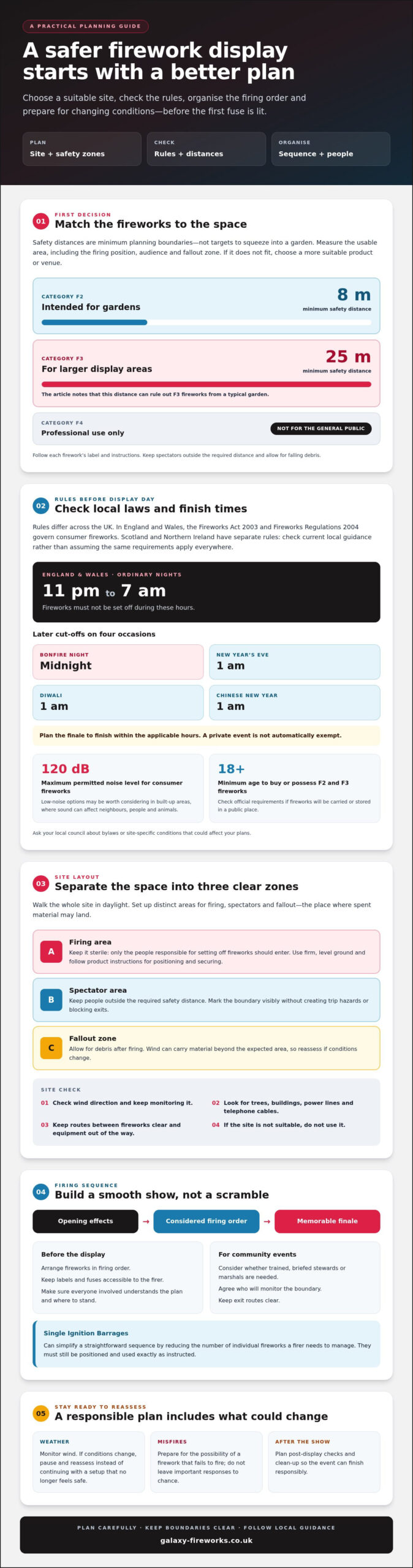
Category F2 fireworks are intended for gardens and require a minimum safety distance of 8 metres. Category F3 fireworks are for larger display areas and require at least 25 metres. Those distances can rule out F3 fireworks from a typical garden. Measure the usable space before buying, allowing for the firing position, audience and fallout zone, where debris may land after firing. Keep spectators outside the required distance and follow the product instructions. Category F4 fireworks are for professional use only, not the general public.
Legal Curfews and Noise Considerations
In England and Wales, fireworks must not be set off between 11 pm and 7 am on ordinary nights. The permitted cut-off is later on four occasions: until midnight on Bonfire Night, and until 1 am on New Year’s Eve, Diwali and Chinese New Year. Plan the finale to finish within the applicable hours, rather than assuming a private event is exempt. Scotland has tighter usage hours, and Northern Ireland has separate regulations, so check current local guidance.
Noise matters, too. The maximum permitted noise level for consumer fireworks is 120 decibels. Low-noise options are increasingly considered for built-up areas, where sound may affect neighbours, people and animals. Check product details and consider the setting before choosing a display.
You must be 18 or over to buy or possess Category F2 and F3 fireworks. If fireworks will be carried or stored in a public place, don’t assume private-garden rules apply: check the current official requirements and any relevant local restrictions first. Contact your local council to ask whether bylaws or site-specific conditions affect your plans. A few checks before you buy can prevent a display being unsuitable for its site or timing.
Site Planning: Organising Your Firing Site and Safety Zones
A well-organised site makes the display easier to fire and helps prevent spectators wandering into unsafe areas. Before setting anything out, walk the whole space in daylight and identify three distinct zones: the firing area, the spectator area and the fallout zone, where spent material may land. The layout should work for the actual site, not just look tidy on paper.
Check the wind direction before the event and keep monitoring it. Smoke blowing towards the audience can obscure the display, whilst wind may also carry debris beyond the expected fallout area. If conditions change, pause and reassess rather than continuing with a setup that no longer feels safe. Look upwards, too: trees, buildings, power lines and telephone cables can obstruct fireworks or create additional hazards. If you can’t establish a clear, suitable firing area, don’t use that site.
Choose firm, level ground so barrages and cakes can stand securely and fire as intended. Follow each product’s instructions for positioning and securing it. Stakes or tape may help stabilise some fireworks, but only use them if the manufacturer’s directions allow it. Keep routes between fireworks clear, and don’t place equipment where a firer could trip over it while moving through the sequence.
Lay Out the Firing Area
Arrange fireworks in firing order before the display begins, with labels and fuses accessible to the firer. Keep the firing area sterile: only the people responsible for setting off the fireworks should enter it. Make sure everyone involved understands the plan and knows where to stand. For a straightforward sequence, Single Ignition Barrages can help reduce the number of individual fireworks a firer needs to manage, but they must still be positioned and used exactly as instructed.
For a community event, consider whether trained, clearly briefed stewards or marshals are needed to keep spectators back and help direct people. Agree who is responsible for monitoring the boundary and keeping exit routes clear before the audience arrives.
Keep Spectators and Routes Safe
Mark the spectator boundary with visible rope, stakes or high-visibility tape, ensuring the barrier doesn’t create a trip hazard or block an exit. Plan clear routes away from the firing area so people can leave promptly if needed. Don’t let the audience drift closer as the display progresses. Recheck the site if wind direction changes or the crowd moves.
For background on the rules governing firework safety, consult the Fireworks (Safety) Regulations and follow the instructions supplied with each item. A careful site walk-through, a clear firing order and firm boundaries turn a garden or community space into a more controlled setting for the display.
Choreographing the Chaos: Choosing the Right Fireworks
A memorable display isn’t simply a collection of bright effects. It has a beginning, a changing pace and a finale that feels earned. Before choosing fireworks, work out what your site can safely accommodate, then build a sequence around the products’ instructions and safety distances. That’s the creative side of how to put on a firework display: shaping a clear visual story without letting spectacle overtake planning.
Give the Display a Beginning, Middle and Finale
Open with a clear burst of colour or sound to capture attention, choosing effects that suit your audience and surroundings. In the middle, vary the pace and height: a rocket can add lift, whilst a cake barrage can provide a sustained sequence. Roman Candles and fountains can offer lower-level effects between larger moments, if your site and product instructions allow. For the finish, build towards a strong final sequence. A deliberate pause can create anticipation, but avoid a confusing “false finish” that leaves spectators unsure whether the show is over.
Think in transitions, not just individual fireworks. For example, move from a bright opening into a steadier run of effects, then increase the energy towards the finale. You don’t need to fire everything at once to make the display feel full. A planned order gives each effect room to register and helps the firer keep track of what comes next.
Choose Products for Variety and Practicality
Single Ignition Barrages combine a sequence into one product, which can simplify the firing order and help create a polished, professional feel. They still need careful positioning and handling, so follow the instructions and site safety plan. For a broader mix, firework display packs can offer a starting point for selecting varied effects. Check the contents and suitability for your site rather than assuming every item will fit.
Choose supporting fireworks for the role they’ll play. Rockets bring effects into the sky; mines create a rising burst from ground level; Catherine Wheels add a distinctive spinning effect; and fountains provide a lower-level display. Roman Candles can contribute height and rhythm, but position and use every item according to its own instructions. Don’t place products close together or combine their effects unless the manufacturer’s directions permit it.
Before the event, write the firing order down and make sure it matches the physical layout. A considered sequence is easier to follow under pressure, and gives the audience a display that builds naturally from first spark to final flourish.
Execution: How to Safely Fire Your Display
Once the site is prepared, keep the firing routine calm and consistent. Before anyone lights a fuse, check the product instructions, confirm the audience is behind the boundary and make sure the firer knows the sequence. If conditions change or anything looks damaged, stop and reassess. A smooth display is never worth taking a shortcut.
Lighting Techniques and Safety Gear
Use a purpose-made portfire where the firework instructions call for one. Its sustained flame can be easier to use in a breeze than a match or cigarette lighter, which may go out or bring your hand too close to the fuse. Wear eye protection and gloves, choose close-fitting, non-synthetic clothing, and keep a torch available to read labels without using an open flame. A high-visibility vest can help others identify the firer in a larger event, but it doesn’t replace a clear sterile zone.
Light the fuse only as directed, then move away promptly to the designated safe position. Don’t lean over a firework, reach across another item or return to the firing area during a sequence. Keep your face and body back, and never hold a firework whilst lighting it. “Arm’s length” isn’t permission to get close: follow the stated method and safety distance for the specific product.
Wet Weather and Misfires
Rain calls for caution, not improvisation. Don’t wrap a fuse or firework in cling film unless the product instructions expressly permit that protection; covering or altering an item can interfere with safe ignition. If a barrage needs protection from drizzle, use only a method approved by its manufacturer, keeping the fuse accessible and lightable as directed. Set rockets in a suitable launch tube on stable ground, following the instructions, and don’t push a tube into damp soil or use an improvised holder.
A hangfire is a fuse that appears to have gone out but may still be smouldering.
If a firework fails to ignite or appears to stop, don’t approach it, relight it or investigate the fuse. Keep everyone away and follow the product’s misfire instructions, including the stated waiting time and disposal advice. A 15-minute wait is not a universal substitute for the manufacturer’s directions; if the instructions are unclear, seek authoritative safety advice rather than taking chances. Never assume a silent firework is safe.
Planning how to put on a firework display includes preparing for a pause or failed ignition, not just rehearsing the sequence. Keep the firer’s area clear and make sure spectators know to stay behind the boundary throughout. For a simpler sequence to organise, explore Single Ignition Barrages, and always follow the instructions supplied with each firework.
Post-Show Protocol and Cleanup Duties
The display isn’t finished when the final effect fades. Keep spectators away from the firing and fallout areas whilst you check for debris and deal with used fireworks. Never assume an item is safe because it appears to have gone out. In particular, don’t approach or handle a firework that failed to launch or may still be smouldering. Keep others clear and follow the product’s misfire instructions.
Clear the Site Carefully
Once the area is safe to enter, inspect the firing area and fallout zone methodically. Check nearby gardens for debris where you can do so safely, and be considerate of neighbours. Don’t pick up an uncertain or unexploded item; keep people away and seek appropriate safety advice.
For spent casings, follow the manufacturer’s disposal guidance and your local council’s rules for pyrotechnic waste. Where the instructions allow, fully douse used fireworks in water and leave them to soak overnight before disposal. Keep them away from children and pets whilst they’re being dealt with, and don’t put anything in household waste until you’ve checked that it’s safe to do so. The firework safety tips UK guide also covers safe storage considerations.
Know When to Bring in a Professional Team
A DIY display may suit a small gathering, but a larger wedding or corporate event can bring more demanding site, crowd and firing requirements. If you can’t confidently manage the venue, safety zones, sequence and clean-up, consider hiring a professional display team rather than stretching a home setup beyond its limits. Professional displays also involve different regulatory controls, so check what’s required for your event.
1st Galaxy Fireworks has over 30 years of experience in consumer retail and professional displays, with a professional display design team available for hire. Discuss your event’s requirements and establish what support is included, rather than assuming a supplier will manage every aspect of the occasion. Read this guide to professional firework displays in the UK to explore the planning involved.
Knowing how to put on a firework display includes knowing when not to do it yourself. A careful final sweep, safe handling of spent items and a realistic assessment of the event’s scale help bring the evening to a responsible close.
Plan with care, then make the night shine
A memorable display depends on more than its finale. Check the laws and product safety distances that apply to your site, organise clear firing and spectator zones, and build a sequence that gives each effect room to shine. Follow each firework’s instructions, prepare for misfires and finish with a careful site check.
Knowing how to put on a firework display means balancing spectacle with sound decisions at every stage. With over 30 years of pyrotechnic experience, 1st Galaxy Fireworks offers Single Ignition Barrages for a streamlined display and display packs with nationwide UK delivery. Expert safety guidance is included with every order.
Ready to plan your next show? Shop professional-grade Single Ignition Barrages and take the next step towards a bright, well-organised celebration.
Frequently Asked Questions
Do I need a licence to put on a firework display in my garden?
For a private garden display using consumer fireworks, you generally don’t need a professional display licence, but you must follow the law, product instructions and safety distances. Category F4 fireworks are for professional use only, and organising a professional display has additional licensing requirements. If you’re unsure whether your event counts as a professional display, or you plan to use a public venue, check with the relevant authorities before proceeding. Safe planning is central to how to put on a firework display.
What is the latest time I can let off fireworks in the UK?
In England and Wales, the usual cut-off is 11 pm, and fireworks must not be set off between 11 pm and 7 am. Exceptions allow fireworks until midnight on Bonfire Night, and until 1 am on New Year’s Eve, Diwali and Chinese New Year. Rules differ across the UK: Scotland and Northern Ireland have separate requirements. Check current guidance for your nation and any local restrictions before setting a start time.
How far away should spectators stand from Category F3 fireworks?
Spectators must be at least 25 metres from Category F3 fireworks, the minimum safety distance for this category. Check the individual firework’s label and instructions, as these provide the requirements for that item. Your site plan must also account for the fallout zone, where debris may land. If you can’t keep the audience and other people outside the required distance, don’t use F3 fireworks at that site.
Can I set off fireworks in a public park or on a beach?
Don’t assume you can use fireworks in a public park or on a beach. You’ll need to check with the landowner or managing authority and the relevant local council about permission, bylaws and any site-specific restrictions. Public spaces can have rules that don’t apply to a private garden, and the site must be large enough for the required safety and fallout zones. Get permission and confirm the applicable requirements before buying fireworks or announcing an event.
What should I do if a firework fails to go off?
Keep everyone well away from a firework that fails to ignite, and don’t approach, relight or investigate it. A fuse can appear to have gone out whilst still smouldering. Follow the product’s misfire instructions, including its stated waiting time and disposal advice, as these can vary. If the instructions are unclear, seek authoritative safety advice. Never treat a silent or apparently spent firework as safe to handle.
Is it legal to set off fireworks on a Sunday in the UK?
There isn’t a general Sunday-only ban on setting off fireworks, but the usual legal restrictions still apply. In England and Wales, the standard curfew prohibits fireworks between 11 pm and 7 am, with specific holiday exceptions. Other UK nations have separate rules, and local restrictions may also affect your plans. Check the requirements for your location and keep the display within permitted hours, whatever day of the week you choose.
How do I protect my pets during a home firework display?
Keep pets indoors in a familiar, secure room, and close windows and curtains to reduce noise and flashes. Provide a comfortable hiding place, and consider familiar background sound if it helps your animal settle. Walk dogs before the display begins, keep cats inside, and make sure doors and gates are secure. Don’t take pets to watch the fireworks. If your pet experiences severe distress, ask your vet for advice well before the event.
Do I need to notify my neighbours before a display?
There isn’t a general requirement to notify neighbours before every private display, but giving them advance notice is a considerate step. Let them know the planned date and approximate time, particularly if nearby residents have pets, young children or other sensitivities. Keep to the legal hours and check whether your council or venue has notification requirements. A brief conversation can help neighbours prepare and reduce the chance of your celebration causing unnecessary concern.