The Ultimate Guide to Single Ignition Barrages: Professional Displays Made Simple
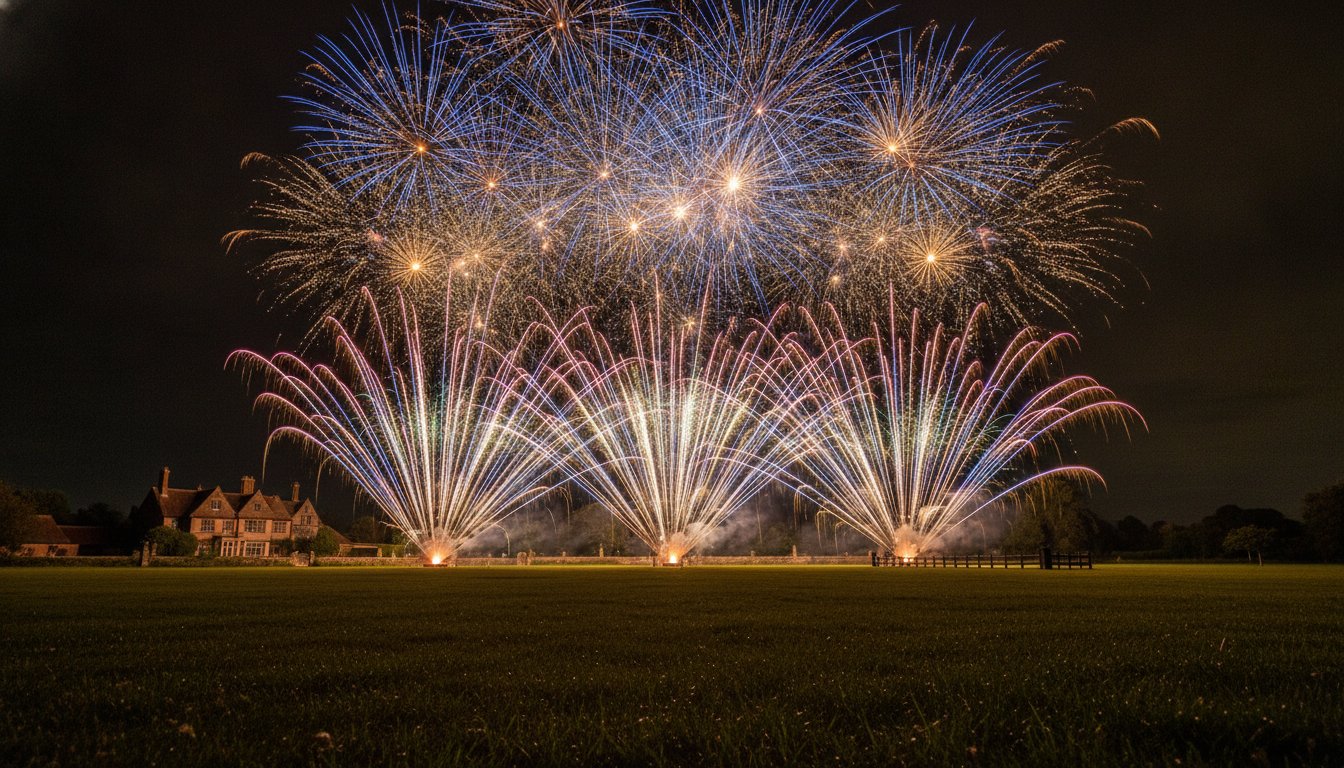
What if you could orchestrate a high-octane firework display that rivals a professional event without the frantic stress of sprinting between fuses in the dark?
Most hosts have experienced that familiar dread: standing in a damp garden, fumbling with a lighter, and worrying if a long, silent pause is making the show look amateurish. It’s understandable to feel anxious about whether you need an 8m or 25m safety zone, or if you’re keeping the momentum going. This is where the single ignition barrage changes the game, allowing you to deliver a pre-choreographed, spectacular performance with a single fuse. You don’t need to be a pyrotechnician to achieve professional results.
In this guide, we’ll show you how to master your setup, manage UK safety regulations with confidence, and choose the right effects to leave your guests in awe. Whether you’re looking for the brilliance of exclusive Britannia Fireworks or the punchy impact of Jorge products, we’ve got the expert insights you need for a flawless night.
Key Takeaways
- Learn how a single ignition barrage provides a complete, choreographed display with the simplicity of lighting just one fuse.
- Understand how tube calibre and firing patterns dictate the scale and visual impact of your show.
- Identify the crucial differences between F2 and F3 categories to ensure your site meets UK safety regulations.
- Master essential setup techniques to secure your fireworks properly and prevent interruptions during the performance.
- Discover why professional display insights make brands like Jorge and Britannia the superior choice for high-end effects.
What is a Single Ignition Barrage?
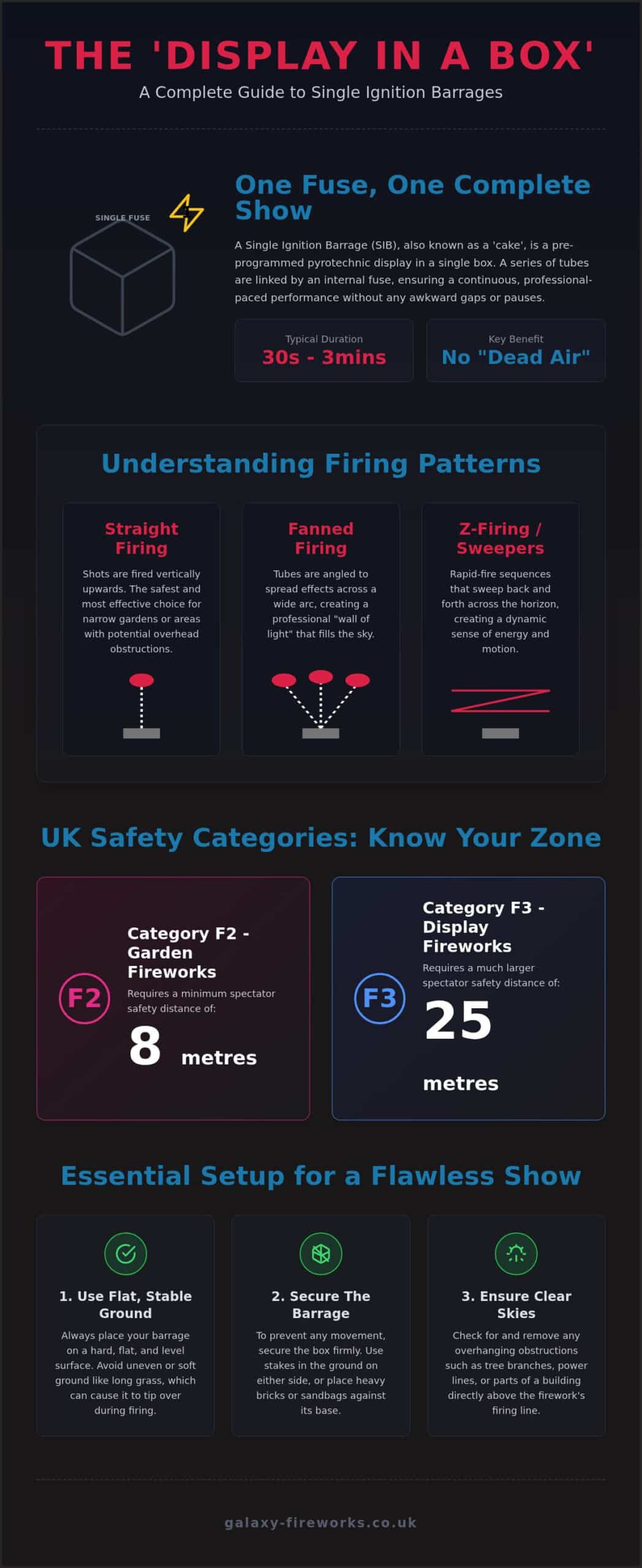
A single ignition barrage represents the pinnacle of consumer pyrotechnics, providing a sophisticated, pre-programmed display that requires only one point of contact to initiate. Inside each unit, a series of individual firework tubes are meticulously linked by a high-quality internal fuse. This sequence ensures that as one effect fades, the next is already ascending, maintaining a relentless pace that keeps your audience captivated. A single ignition barrage is a pre-programmed pyrotechnic sequence lasting between 30 seconds and three minutes.
Amongst professionals, these units are frequently called “cakes” because of their blocky, multi-tube appearance. Understanding what are fireworks at a fundamental level helps in appreciating the precision engineering that goes into these complex blocks. The primary benefit of this design is the total lack of “dead air” or pauses between effects, ensuring constant sky saturation throughout the performance. You won’t have those awkward, silent gaps where guests wonder if the show has finished; instead, you get a seamless flow of light and sound.
Barrages vs. Cakes: Is There a Difference?
In the UK retail market, these terms are often used interchangeably, which can lead to some confusion for first-time buyers. Technically, a “cake” refers to the physical structure of multiple tubes fused together in a single block. A “barrage” usually implies a more complex, multi-effect sequence with varied heights, timings, and noise levels. Whilst all barrages are technically cakes, not all cakes have the duration or the variety of effects to be truly classified as a single ignition display. We focus on sourcing units that offer the depth and duration required to carry an entire event.
The “Display in a Box” Concept
SIBs have become the preferred choice for New Year’s Eve celebrations and garden parties because they offer a genuine “display in a box” experience. Historically, hosting a home display meant lighting individual rockets or fountains one by one, which was often a disjointed and frantic experience for the organiser. The shift to a modern, single-fuse approach is significantly safer and more impressive. At 1st Galaxy Fireworks, we leverage our 30 years of professional display experience to select barrages that mimic the pace and intensity of a choreographed show. We look for units from brands like Jorge and Britannia that offer professional-standard effects, ensuring your guests see a cohesive performance rather than a series of isolated bangs.
Understanding Firing Patterns and Visual Effects
Selecting the perfect single ignition barrage requires a deeper look at the architecture inside the box. The internal arrangement of the tubes is what determines how the effects are distributed across the sky, turning a simple sequence into a choreographed performance. Calibre size, or the diameter of each tube, plays a vital role here. A larger calibre usually indicates a more powerful lift charge and a wider “break” size, allowing the firework to reach greater heights and produce more expansive bursts. Modern units often combine different calibres to create a multi-layered visual experience. This technique ensures that the sky remains filled at multiple altitudes, providing a depth of field that mimics professional-grade displays.
Choreography is nothing without a strong finish. The internal fuse timing is carefully calibrated to ensure a spectacular “finale” at the end of the sequence, typically involving a rapid-fire volley of shots that saturate the sky in a final crescendo of light. If you’re looking to see these sequences in action before you buy, you can browse our curated selection of pro barrages to find the perfect rhythm for your event.
Straight, Fanned, and V-Firing Explained
The firing pattern is the most influential factor in how your display interacts with your venue. Vertical or “Straight” firing shoots every effect directly upwards. This is the safest and most effective choice for narrow gardens or sites where overhanging trees might be a concern. In contrast, Fanned firing angles the tubes to spread effects across a wide arc. This creates a professional “wall of light” that fills the viewer’s peripheral vision. For those seeking high energy, Z-firing and Sweepers are rapid-fire sequences that move back and forth across the horizon, creating a dynamic sense of motion that keeps the audience guessing where the next burst will appear.
Common Pyrotechnic Effects Found in Barrages
The visual variety within a single ignition barrage comes from the specific pellets packed into each tube. While the chemistry of firework colors dictates the vibrant reds and greens, the internal construction defines the shape. Peonies and Chrysanthemums are the classic spherical bursts; peonies offer clean breaks of colour, whilst chrysanthemums add a trailing, spark-filled texture. Brocade Crowns are a crowd favourite, producing thick trails of gold or silver glitter that hang in the air for several seconds. To add an auditory layer, look for Crossettes, which split into four distinct paths, and Crackle effects that provide a sharp, energetic texture to the performance.
Selecting the Best Single Ignition Fireworks for Your Site
Choosing the right fireworks is about more than just picking the loudest bang or the most vibrant colours. It is about matching the pyrotechnics to your specific environment to ensure a show that is as safe as it is spectacular. Safety is paramount; your choice must be dictated by the available space in your firing area. In the UK, fireworks are strictly categorised to ensure they are used in appropriate settings. You must also consider the “fallout zone” where debris may land. This is especially important with fanned barrages that spread effects across a wide arc, as the wind can carry spent casings further than you might expect. Always check the label for the specific safety distance before purchase.
Measuring your site is a simple but vital task. Don’t just guess the distance; use a tape measure to confirm you have the required clearance. This isn’t just about where your guests stand. You also need to account for overhanging trees, power lines, and neighbouring outbuildings. If your garden has limited width or overhanging branches, a straight-firing single ignition barrage is often a better choice than a fanned version, as it keeps the action contained within a vertical column. If you’re unsure whether a standard retail option or a more powerful unit is right for your space, our guide to pro barrage fireworks vs standard consumer cakes breaks down the key technical and visual differences to help you decide.
Category F2: The 8-Metre Garden Barrage
Category F2 fireworks are engineered for smaller suburban gardens where space is at a premium. These units typically feature smaller calibres, often between 20mm and 25mm, but they compensate with high shot counts that provide a sustained, high-energy performance. This ensures you get a professional rhythm without the risk of effects reaching neighbouring properties. Our exclusive Britannia Fireworks range includes several F2 options designed specifically for safe garden use. These barrages provide a high-impact experience whilst strictly adhering to the 8-metre minimum safety distance, making them a reliable choice for family gatherings.
Category F3: The 25-Metre Large Display
When you have a significant open space, such as a large field or parkland, Category F3 is the gold standard for home displays. These are the heavy hitters of the consumer world. A Category F3 single ignition barrage features maximum legal powder weights and large 30mm calibres, delivering massive sky coverage and thunderous breaks. Brands like Jorge Fireworks are renowned for their F3 offerings, which provide professional-grade intensity that fills the entire horizon. Because these units are so powerful, they demand a minimum 25-metre safety distance for spectators. The construction of these multi-tube devices often follows rigorous international quality benchmarks, similar to the federal fireworks safety regulations that govern performance and stability in other major markets, ensuring they remain upright and secure during their high-energy sequences.
How to Set Up and Fire Your Barrage Safely
Preparation begins long before the first spark; organise your firing area whilst it is still light to ensure you have a clear, unobstructed view of the ground and any potential trip hazards. Whilst the simplicity of a single ignition barrage is its greatest asset, the sheer power contained within these multi-tube units demands professional-standard preparation. Securing the firework is the most critical step to prevent “pot-holing” or tipping during the sequence, as the repetitive recoil from larger calibres can cause an unsecured box to shift or fall over entirely. Always have a secondary plan and safety equipment, such as a large bucket of water or sand, positioned nearby to manage any small spot fires or spent debris. Many larger units include a secondary fuse, known as a ‘reserve fuse’, which allows you to restart the display from the opposite end if the primary ignition source fails to burn through the entire sequence.
Securing Your Firework: Stakes and Tape
To ensure a stable firing platform, drive a sturdy wooden stake into the ground on the audience side of the firework. This placement is vital; if the barrage were to move, the stake acts as a physical barrier between the pyrotechnics and your guests. Use strong gaffer tape or heavy-duty cable ties to secure the barrage box to the stake, ensuring it is held firmly against the wood with no room for movement. Before you finish, double-check the “audience this way” arrow printed on the box. It must point directly at your spectators to ensure the fanned effects and angles perform exactly as the manufacturer intended, keeping the display safely within your designated fallout zone.
Lighting Procedures and Post-Show Safety
When you’re ready to begin, use a portfire or a dedicated safety lighter to ignite the fuse at arm’s length. These specialist lighters are preferred because they provide a steady, windproof flame that allows you to stay at a safer distance than a standard match. Never lean over the firework whilst lighting or if it appears to be a “dud”. If a barrage stops mid-sequence, do not approach it immediately. Instead, wait at least 20 minutes before approaching a spent or interrupted barrage to douse it thoroughly with water. This cooling period is essential to ensure no internal embers remain active before you dispose of the casing. If you’re planning a complex event, you can browse our single ignition barrages to find units that offer both spectacular effects and clear safety instructions for a stress-free night.
Why Source Your Single Ignition Barrages from 1st Galaxy Fireworks?
At 1st Galaxy Fireworks, we don’t just sell products; we live and breathe pyrotechnics. With over 30 years of experience in the industry, our team designs and executes large-scale professional displays across the country. This deep-rooted expertise is exactly what we bring to our retail range. When you purchase a single ignition barrage from us, you aren’t just getting a box of fireworks. You’re getting a pre-vetted, professional-standard performance curated by the same experts who light up the sky at major corporate and public events. We act as your partners in the display, ensuring you have the tools to create a safe and spectacular show.
Our exclusive Britannia Fireworks brand represents the pinnacle of UK-compliant pyrotechnic quality. We developed this range to meet our own exacting standards for safety and visual brilliance. Alongside our own brand, every Jorge Firework in our inventory is hand-selected for its performance, colour clarity, and reliability. We understand that your event, whether it’s a wedding or a garden party, deserves a flawless show without the anxiety of “dud” effects or poor timing.
Expert Curation by Professional Pyrotechnicians
Our 30-year heritage informs every addition to our annual collection. We don’t simply stock what is available; we test for “hang time” and colour saturation to ensure every shot earns its place in our catalogue. “Hang time” refers to how long a gold brocade or silver glitter effect remains visible in the air. This is a critical factor that separates professional displays from amateur ones. By applying these professional display team insights to our consumer products, we provide a “safe pair of hands” for every customer. Whether you are a novice hosting your first display or a seasoned enthusiast, our curation ensures your single ignition barrage delivers maximum impact for your budget.
Convenient Nationwide Delivery and Support
Getting your fireworks to you safely is just as important as the fireworks themselves. We offer nationwide delivery across the UK using specialist couriers. These professionals ensure your pyrotechnics are handled with the utmost care from our warehouse to your front door. Beyond delivery, you have access to our expert team for advice on display timing and product pairing. We take pride in our history and remain committed to maintaining high standards across every interaction. If you’re ready to elevate your next event with a seamless performance, you can Explore our full range of single ignition barrages today.
Master Your Next Display with Confidence
Achieving a seamless, professional-standard firework show no longer requires a team of pyrotechnicians or the stress of lighting multiple fuses. By choosing a high-quality single ignition barrage, you can enjoy a pre-programmed sequence of varied effects and firing patterns that keep the sky saturated from start to finish. Success lies in the details: selecting the correct F2 or F3 category for your garden and ensuring your unit is staked and taped securely before the first spark.
With over 30 years of pyrotechnic excellence, we are proud to be exclusive Britannia Fireworks stockists, providing the same expert safety guidance included with every order that we use in our own professional displays. Our team is here to help you move from an amateur setup to a polished, uninterrupted performance that will leave your guests in awe. It’s time to take the guesswork out of your event planning and focus on the joy of the experience.
Shop our curated collection of Single Ignition Barrages and prepare for a night of brilliant visual wonder.
Frequently Asked Questions
Is a single ignition barrage safer than individual fireworks?
A single ignition barrage is generally considered safer because it requires lighting only one fuse to deliver a complete, choreographed show. This approach significantly reduces the time the organiser spends in the firing area and minimises the risk of accidents associated with lighting multiple individual items in the dark. By using this single-fuse method, you can retreat to a safe distance once and enjoy the performance without repeated exposure to the pyrotechnics.
How long does a typical single ignition firework last?
Most single ignition fireworks are designed to last between 30 seconds and three minutes, depending on the shot count and the speed of the internal fuse. Smaller units often provide a high-intensity burst over a shorter duration, whilst larger compound cakes offer a more sustained, theatrical experience. We always recommend checking the specific duration on the product label to ensure the timing fits the rhythm of your planned event.
Do I need a licence to fire a large barrage in my garden?
You don’t need a special licence to set off consumer fireworks on your own property, provided you are over 18 and adhere to UK curfew laws. Most nights allow firing until 11pm, with extensions for Bonfire Night and New Year’s Eve. However, you must ensure your garden meets the minimum safety distance required for the specific category of the barrage, whether it is an F2 or F3 rated product.
What should I do if my single ignition barrage stops halfway through?
If a barrage stops mid-sequence, never approach it immediately or attempt to relight the primary fuse. Wait at least 20 minutes to ensure all internal embers have cooled. Many professional-grade units, such as those from our exclusive Britannia Fireworks range, feature a reserve fuse at the opposite end of the box. After the cooling period, you can safely use this secondary fuse to finish the display from the other side.
Can I use a single ignition barrage in the rain?
Fireworks can be used in light rain, but you should protect the unit from becoming waterlogged, as damp fuses may fail to ignite. A common professional tip is to wrap the barrage in thin kitchen cling film; the firework will easily blow through this layer when fired. Ensure the bottom of the box stays dry by placing it on a wooden board or a pallet rather than directly on wet, muddy grass.
How do I know if my garden is big enough for a 25-metre barrage?
You must physically measure the distance from the firing point to your spectators using a tape measure to confirm a full 25-metre clearance. This distance is a legal requirement for Category F3 fireworks to protect your guests from debris and noise. If your garden doesn’t allow for this, you should opt for a Category F2 single ignition barrage, which only requires a minimum safety distance of 8 metres.
What is the difference between a barrage and a compound firework?
A standard barrage is a single block of fused tubes, whilst a compound firework consists of several barrages pre-fused together on a single board. Compounds are essentially “super-barrages” that provide even longer durations and more complex choreography, often exceeding four minutes of continuous firing. Both options offer the convenience of a single ignition point, but compounds are significantly larger and heavier, designed for the most substantial and impressive garden displays.
Are single ignition fireworks louder than standard ones?
The noise level depends on the calibre and the specific effects rather than the ignition method itself. UK law limits consumer fireworks to a maximum of 120 decibels. Whilst some barrages focus on visual beauty with “quiet” effects like falling leaves, others are designed for maximum auditory impact with loud salutes and crackling bursts. We provide detailed descriptions for every product so you can choose a noise level that suits your specific neighbourhood.