
Big Rockets: How to Choose Rockets for a Spectacular Firework Display

The biggest rocket isn’t automatically the best choice for your display. Big rockets can create a dramatic finale, but a product description alone won’t tell you whether a rocket suits your setting or plans. A striking effect is only spectacular when you can use the product safely and as directed.
Words such as “large”, “powerful” or “shell head” can catch your eye, but they don’t answer the practical questions: What effect is described? How many rockets are in the pack? What space and setup does the label require? This guide explains how to compare product details and effects so you can choose for the atmosphere you want, rather than a size claim alone. Safety distances and instructions vary between products, so always follow the specific label. 1st Galaxy Fireworks offers rockets alongside its other consumer fireworks, and this guide can help you make a considered selection.
Key Takeaways
- Compare rocket dimensions, pack quantity and stated effects separately. They describe different things.
- Read each product description for its stated colour, tail, burst style and sound.
- Choose an effect that suits your display setting and audience, rather than assuming the biggest rocket is best.
- Plan the site before firing and follow the specific product label, as safety distances and instructions vary.
- Explore rockets from 1st Galaxy Fireworks and compare the details for each product before choosing.
What makes big rockets different from other firework rockets?
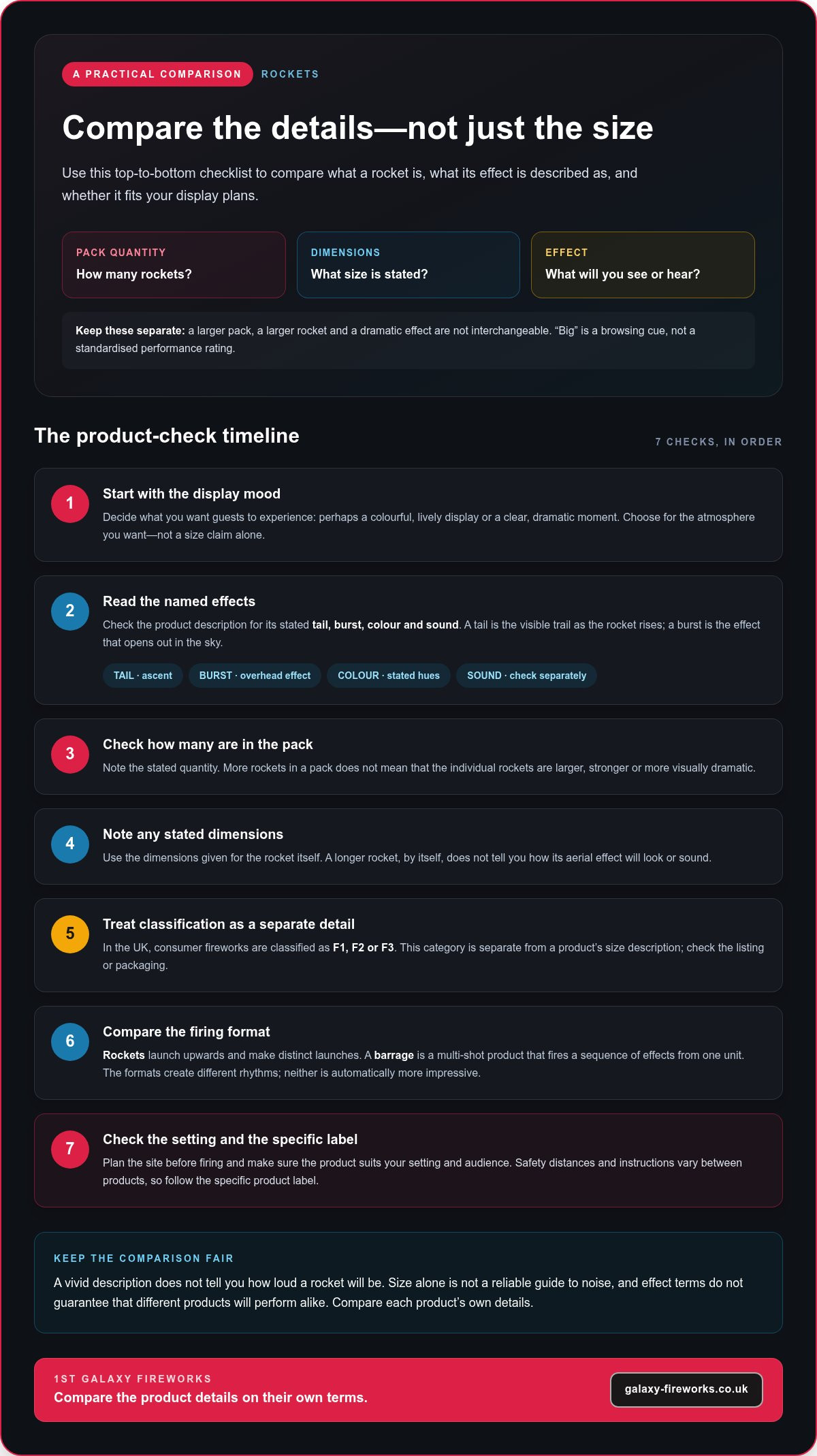
“Big” is a descriptive label, not a standardised measure of a rocket’s size or performance. Compare the product’s stated dimensions, pack quantity, effects and classification. Each detail tells you something different, so don’t use one as a shortcut for the others.
A pack with more rockets doesn’t necessarily contain larger rockets. Likewise, a longer rocket doesn’t, by itself, tell you how its aerial effect will look or sound. Product descriptions can help set expectations, but dramatic wording doesn’t mean different products will perform alike. Check the individual listing and packaging rather than assuming a label has the same meaning across the range.
A rocket’s visual effect describes what you see in the sky; its size and pack quantity describe the product you buy.
What does ‘big rocket’ mean on a product listing?
Treat “big rocket” as a browsing cue, not a formal performance rating. Look for product-specific information such as the number of rockets in the pack, any stated dimensions and the classification shown on the listing or packaging. In the UK, consumer fireworks are classified as F1, F2 or F3; that category is separate from a product’s size description. The general overview of firework types and effects can help with broader terminology, but the product’s own details are the practical reference.
How are rockets different from barrages?
A rocket launches upwards before producing an aerial effect. A barrage is a multi-shot product designed to fire a sequence of effects from one unit, rather than sending up separate rockets one at a time. The formats create different rhythms: rockets make distinct launches, whilst a barrage can deliver a more continuous run of shots. For a closer look at that format, explore this guide to single ignition barrages.
Neither format is automatically more impressive. The better fit depends on the pace and character you want, as well as the product’s instructions. When comparing rockets, separate the listing into three questions:
- How many? Check the number of rockets supplied in the pack.
- What size? Note any dimensions stated for the rocket itself.
- What effect? Read the description for the specific colours, sounds or aerial effects it names.
This makes comparisons clearer: a large pack, a large rocket and a dramatic effect aren’t interchangeable. 1st Galaxy Fireworks offers rockets to compare by their individual product details, helping you understand what “big” means for each option.
Big rocket effects: compare bursts, colour and sound
A rocket’s impact comes from more than its size. Its trail during ascent, burst at height, colour and sound all affect how the display feels. One rocket might create a bright visual moment, whilst another may be chosen for a particular colour or a more noticeable report. These are separate qualities: a vivid description doesn’t tell you how loud a rocket will be, and size alone isn’t a reliable guide to noise.
Use the wording on each product listing to compare its stated effects. Effect terms help you picture the display, but they don’t mean every rocket will perform alike. Read the details closely and don’t treat a dramatic phrase as a guarantee of a particular result.
How do rocket tails and aerial bursts change the display?
The ascent is the rocket’s upward journey; the aerial effect is what happens once it reaches height. If a listing mentions a tail, it describes the visible trail behind the rocket as it rises. A burst refers to the effect that opens out in the sky. Some descriptions focus on one of these moments, whilst others describe both, so check which part of the experience the wording refers to.
Consider the sequence you’d like guests to see. A visible tail makes the launch part of the spectacle, whilst a described burst draws attention to the moment overhead. Neither term tells you the exact height or duration unless the listing states it. Compare each rocket’s description rather than assuming that a particular term guarantees the same result across products.
How should you compare colour, effects and noise?
Start with the mood you want: perhaps a colourful, lively display, or one where each rocket creates a clear, dramatic moment. Then look for the colours and visual effects named in the product description. If a listing doesn’t mention a feature, don’t assume it from the rocket’s size or from wording used for another product.
Check sound separately. Look for any sound description on the specific product listing; a larger-looking rocket doesn’t automatically mean a louder effect. Visual impact and noise are different considerations, so weigh them separately against your audience and setting. The GOV.UK guidance on UK fireworks law and safety is useful for broader considerations when planning fireworks use.
For a practical comparison, note the stated tail, burst, colour and sound for each option. Decide which details matter most to your display instead of ranking rockets by a single adjective. Explore the rocket range from 1st Galaxy Fireworks and compare each product’s description on its own terms.
Are big rockets always better? Compare them with your display needs
No. Big rockets can make a striking contribution, but size language alone won’t tell you whether a rocket suits your occasion. Choose by comparing the stated effects, firing format and practical requirements with the display you’re planning. A larger pack may contain more rockets, but pack quantity doesn’t indicate the strength or visual scale of each individual rocket.
Assess each option against four priorities: the effect you want, the details in its product description, the suitability of your setting and the people watching. This helps you avoid choosing by one impressive-sounding phrase. Keep pack quantity separate from product effect: more rockets mean more individual items, but don’t assume each will create a larger display.
Which rocket features matter most for your occasion?
For a short display, look for variety in the stated effects and consider how each rocket fits into the sequence, rather than focusing only on pack size. If you’re choosing a celebratory finale, compare the effects named in each description. “Big” doesn’t specify what the final moment will look or sound like. For mixed audiences, consider visual preferences and any stated sound details separately; don’t assume noise from a rocket’s dimensions.
When might another firework format suit the display better?
Rockets and barrages offer different firing formats, so think about the rhythm you want as well as the effects. A barrage may suit a sequence of shots, whilst rockets provide distinct launches. The right fit depends on your plan and the product instructions, not a general ranking of formats. For broader planning considerations, this professional firework display planning guide offers further context.
For larger organised displays, the British Pyrotechnists Association shares information about professional fireworks display safety and standards. For a home celebration, base your choice on the product’s stated effects and requirements. Compare the rocket range from 1st Galaxy Fireworks with your display priorities in mind.
How to plan a big rocket display safely and responsibly
A memorable display starts with a suitable site, not the biggest effect. Plan in order: assess the space, read the product label, prepare the area, then follow the instructions exactly. Safety distances and directions vary between fireworks, so the specific product label must guide your plans. Don’t transfer a distance or direction from one rocket to another.
Check current official UK guidance for legal requirements and classification information. Rules can vary across the UK, and a product’s classification is not a substitute for understanding where and how it may be used. The UK firework safety guide offers further help with responsible planning.
What should you check before choosing a firing location?
Compare the available open space with the safety distance stated for the individual product. Consider where spectators will stand and look for buildings, trees or other obstructions around the intended area. Choose a location where you can follow the label without improvising or placing people and property in unsuitable positions.
If the site can’t meet the product’s stated requirements, don’t try to make the rocket fit. Choose a more suitable display plan or setting. A less ambitious effect in an appropriate space is better than using a product whose instructions the site can’t accommodate.
Why do rocket instructions and classifications matter?
The label provides product-specific information, including its classification, safety distance and directions for use. These details aren’t interchangeable between rockets, even if their descriptions sound similar or both are described as big rockets. Read the whole label before planning, and use current authoritative UK guidance for legal or classification questions rather than relying on general assumptions.
Use this planning sequence before the event:
- Check the site. Identify the available open space, spectators and potential obstructions.
- Read the label. Note the classification, stated safety distance and all product instructions.
- Prepare the area. Organise the space so the planned use follows the product’s directions.
- Follow the instructions. Use the rocket only as directed, and don’t adapt the method or ignore a requirement.
Make sure the people involved understand the plan, and keep the display within what the product instructions and setting allow. If anything about the label is unclear, pause rather than guessing. A clear plan keeps practical decisions in focus whilst preserving the anticipation of the display.
1st Galaxy Fireworks offers rockets to compare by their individual product details. Explore rockets for your display and use the stated instructions to guide your choice.
Where to buy big rockets for a UK celebration
Once you’ve settled on the display you want and the space you can use, compare products using their individual details. A product page should tell you what’s included and what effect is described, but “big rocket” won’t mean the same thing across every listing. Treat each rocket as a separate choice and make sure its instructions and requirements fit your plans.
What should you compare on a big rocket product page?
Before choosing, check the details that affect both the display and your preparation. Pack quantity tells you how many rockets are supplied, not how large or dramatic each will be. Dimensions, where stated, describe the product itself; effects describe what the listing says you can expect to see. Keep these points separate as you compare.
- Intended effect: Check the stated colours and visual features against the atmosphere you want.
- Pack details: Note the quantity and any dimensions provided, without treating either as a performance rating.
- Classification: Read any classification shown for that specific product.
- Use instructions: Check the product’s stated safety distance and directions before deciding it suits your setting.
Descriptions and specifications belong to individual products. Don’t transfer an effect, distance or classification from one rocket to another, even if the products look similar. If a detail matters to your decision, use the listing and product label rather than assumptions based on size language or pack imagery. This final check helps you choose with confidence and plan around the product’s actual directions.
How can 1st Galaxy Fireworks help you explore rocket options?
1st Galaxy Fireworks is a UK fireworks retailer with over 30 years of experience. Its nationwide online shop offers rockets alongside a range of consumer fireworks, including products under the exclusive Britannia Fireworks brand and other leading labels. Compare the information provided for each rocket, then match its stated effects and instructions to your intended display. One product’s effects and specifications shouldn’t be taken as representative of all rockets.
A considered choice combines the excitement of an aerial display with the practicalities of your celebration. Keep four things in view: the effect you want, what the pack contains, the product’s instructions and whether your setting can accommodate them. When those points align, you’re better placed to choose a rocket for the occasion instead of relying on size language alone.
Explore 1st Galaxy Fireworks to browse rocket options and compare their individual product details.
Make your celebration’s defining moment count
Before you choose, picture the moment you want guests to remember. Is it a bright pause in the evening, a joyful crescendo or a final flourish that brings everyone’s attention skywards? Let that intention guide your choices. A display feels more considered when each element has a purpose, rather than competing to be the biggest or loudest.
That vision can also make browsing more rewarding. Look for options that suit your celebration, whether you’re planning a family gathering, a wedding or another special occasion. 1st Galaxy Fireworks offers a nationwide online shop, delivery and its exclusive Britannia Fireworks brand, alongside more than 30 years of industry experience. Browse the listings with the moment you want to create in mind.
Explore big rockets and other fireworks at 1st Galaxy Fireworks, and start planning a celebration that feels unmistakably yours.
Frequently Asked Questions
What makes a firework rocket a big rocket?
“Big rocket” is a descriptive phrase, not a precise size or performance class. A listing may use it as a browsing label, so look for measurable details to understand the specific product. Compare the stated rocket dimensions with the number included in the pack: a pack with more rockets doesn’t necessarily contain larger individual rockets. Use the product information and packaging, rather than the label alone, to judge what you’re considering.
How high do big rockets go?
There isn’t one height that applies to all big rockets. The ascent can vary between products, and a dramatic description or large-looking rocket doesn’t establish how high it will travel. If height matters to your plans, check whether the individual listing or packaging gives a specific figure; don’t estimate from photographs or compare products using size language alone. Assess the location against the product’s stated instructions before deciding it’s suitable.
Are big rockets louder than smaller rockets?
Not necessarily. A rocket’s physical size and its sound are different characteristics, so don’t assume a larger product will make more noise. Read the description for that specific rocket and look for any stated sound effects. If noise matters to your gathering, consider it separately from colour and visual impact. Don’t use the word “big” as a substitute for product-specific sound information.
Can you store fireworks at home before a celebration?
Yes, but store fireworks responsibly and follow current official guidance for where you live and the products you have. Keep them in their original packaging, away from sources of heat or ignition, and somewhere secure and inaccessible to children. Rules can depend on the type and quantity stored, and requirements differ across the UK. Check the relevant official fireworks guidance and follow any storage directions supplied with the products.
What does 1.3G mean on a firework listing?
1.3G is a transport and storage hazard classification, not the same thing as a consumer-use category such as F2 or F3. In this code, 1.3 indicates a fire hazard with a minor blast or projection hazard, but not a mass explosion hazard; G is the compatibility group. Don’t use this marking alone to judge a firework’s effects or suitability. Check the product’s consumer category and instructions too.
Can a rocket be used without a launch tube?
Only use a rocket with the launching arrangement specified in its instructions. Some products may be supplied with particular components, whilst others may require a separate method stated on the label. Don’t improvise a launch tube, substitute equipment or fire a rocket unsupported. If the instructions or required setup aren’t clear, don’t proceed until you have reliable guidance from the product information or an authoritative fireworks safety source.
Do big rockets come in different pack sizes?
Yes, pack contents vary by product. A listing may describe a single rocket or a pack containing several, but the word “big” doesn’t tell you how many are included. Check the quantity stated on the product page and compare it with the packaging when your order arrives. Also distinguish the number in the pack from the size and effects of each rocket, as these details describe different things.
