
How to Set Up Fireworks and Choose a Safe Launch Area
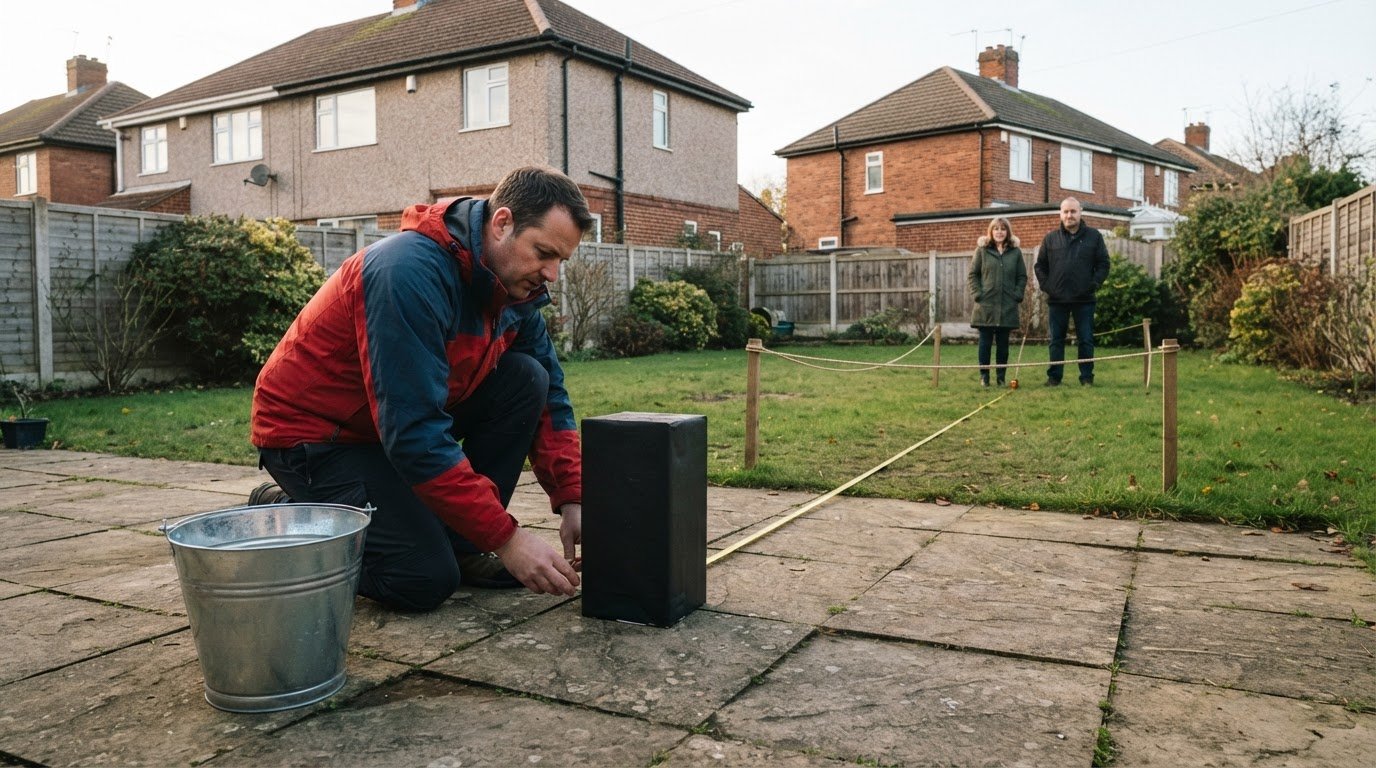
A rocket is only ready to fire when its launch area, equipment and spectator positions are planned together. For Category 2 garden fireworks in the UK, the operator should stand at least 8 metres away, with spectators positioned between 8 and 20 metres away. Knowing how to set up fireworks starts with choosing a flat, open area and following the instructions supplied with each firework.
It’s natural to focus on the moment a rocket rises and bursts into colour, but careful preparation helps the evening run smoothly. Set up in daylight, keep people clear of the launch area, and never return to a firework that has been lit but hasn’t gone off.
This guide explains how to plan a garden launch area, position spectators, prepare suitable equipment and handle misfires safely. It also outlines the UK firework categories, including why Category 4 fireworks are for professional use, so you can make informed choices about a home display and know when a professional display is the better fit.
Key Takeaways
- Plan the display layout in daylight, with a clear launch area and safe routes for people to move around.
- Position spectators according to the firework category and keep them well away from the launch area.
- Prepare suitable equipment before the display so you can manage setup and small incidents safely.
- If a firework fails to go off, leave it alone and follow safe handling and disposal steps.
- Understand the difference between consumer categories and professional-use fireworks before choosing a display.
1. Recommended operator and spectator safety distances
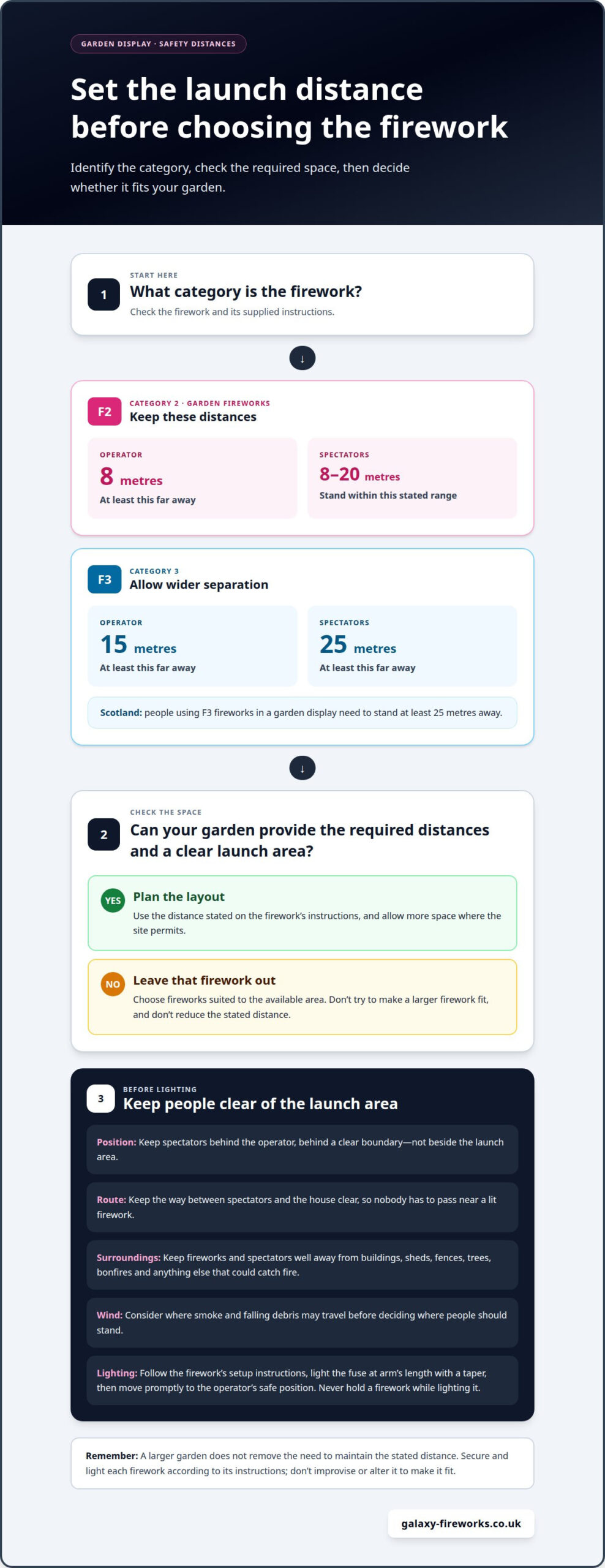
Set the operator and audience positions before lighting anything. For Category 2, or F2, garden fireworks, keep the operator at least 8 metres away. Spectators should stand between 8 and 20 metres from the fireworks. Use the safety distance stated on each firework’s instructions, and allow more space where the site permits. A larger garden does not remove the need to maintain the stated distance.
Category 3, or F3, fireworks need a wider separation. Keep the operator at least 15 metres away and spectators at least 25 metres away. In Scotland, people using F3 fireworks in a garden display need to stand at least 25 metres away. If your garden cannot provide the required space, don’t try to make a larger firework fit. Choose fireworks suited to the available area instead.
Keep spectators behind the operator, not beside the launch area. Mark a clear boundary and ask guests to stay behind it throughout the display. Children and anyone who may move closer should stay with a responsible adult. Keep the route between spectators and the house clear so nobody needs to pass near a lit firework. These measures help keep people away from heat, sparks and debris.
Fire can spread beyond the launch point. Keep fireworks and spectators well away from bonfires, buildings, sheds, fences, trees and anything else that could catch fire. Don’t position spectators where sparks or smoke could drift towards them. Wind direction can change, so consider where smoke and falling debris may travel before deciding where people should stand. Leave extra room if the garden layout makes movement difficult.
Secure and light each firework according to its instructions, using the setup specified for its type. Light the fuse at arm’s length with a taper, then move promptly to the operator’s safe position. Never hold a firework while lighting it. Rockets need a suitable launching arrangement, while other types may require a different setup. Don’t improvise or alter a firework to make it fit, and keep spectators behind the planned boundary.
In the UK, fireworks may be let off until midnight on November 5th, according to The National Archives (legislation.gov.uk). Fireworks can cause burns and other injuries, while sparks may start fires. For injuries, burns or accidents involving a garden display, call 999 immediately. For non-emergency advice, call NHS 111. Keep people clear of the incident and don’t approach a firework that has failed to go off.
2. Choosing a safe garden launch area
Start with a simple plan on paper, then match the launch area to the garden. Choose a flat, open space rather than a slope, narrow path or crowded corner. Check the planned position against fences, sheds, trees and overhead obstructions. If branches, buildings or garden structures restrict the area, choose another location or a smaller display.
Mark the audience area, launch area and routes between them. Show clear ways to and from the house so guests don’t need to cross the firing area. Keep the layout straightforward: spectators in one defined space, fireworks in another, with room to move between them. A garden with an open lawn and an unobstructed route indoors is easier to organise than one divided by furniture, dense planting, or garden railway layouts built using Narrow Minded Railworks kits.
Arrange fireworks by size and effect. Smaller fireworks can go towards the front of the display, with larger ones further back. This creates a clear sequence and helps prevent larger items from being positioned in front of smaller ones. Keep every item within the planned launch area and follow its instructions for placement. Don’t force a firework into a setting that doesn’t suit its requirements.
Choose fireworks that fit the space, not just the display you imagined. Consider the garden’s usable area, the audience position and each firework’s stated safety distance. If the available space cannot accommodate an item, leave it out. A smaller, well-planned selection is safer than an arrangement that puts people or launch equipment too close together.
Choose who will operate the display before setting up. One responsible person should focus on the fireworks rather than hosting guests or moving around during the display. In Scotland, only one person should be responsible for setting off fireworks at a home display. Give other guests clear roles, such as staying with spectators, rather than letting several people handle fireworks.
Rules can vary between local council areas, so consult your council’s fireworks rules before choosing the date and setting. Follow any local restrictions that apply to your planned display.
The cost of a small display depends on the fireworks selected, their quantity and the scale of the programme. A compact selection and a larger mix will have different totals, so plan your choices around your budget rather than relying on a standard UK price.
If you’re planning a garden display, explore fireworks for a display that can be matched to the available setting and audience.
3. Equipment for a home fireworks display
Prepare essential equipment before lighting fireworks, and keep it where the operator can reach it without crossing the launch area. Have a taper for lighting, a bucket of water for cooling sparklers and dealing with small fires, and first-aid supplies on standby. Having these basics ready helps keep the display orderly and avoids searching for equipment once fireworks are underway.
Plywood can protect the ground at the launch point when suitable, but it doesn’t replace the firework’s instructions or make an unsuitable position safe. Set out each item as instructed and keep the operator’s route clear. For a rocket, make sure its stick doesn’t bind in the launching tube. It must move freely, so don’t force it into a tube that grips it.
In Scotland, keep fireworks in a closed metal box and take them out one at a time. This keeps the remaining fireworks together instead of scattered around the setup. Elsewhere in the UK, organise the display so the operator can identify and reach each item without disturbing those already positioned. Keep lighting equipment separate from the fireworks until needed.
Plan the layout on paper before arranging equipment. Mark the launch positions, the audience area and clear routes to and from the house. A simple sketch can show whether the operator’s path stays separate from spectators and whether there is room to prepare each firework. For a larger public display, the layout and access arrangements need careful coordination; Category 4 fireworks are restricted to professional use in the UK, according to The National Archives (legislation.gov.uk).
Safety distances depend on the firework category and its instructions. For Category 2 garden fireworks, the operator distance is at least 8 metres. For Category 3 display fireworks, keep the operator at least 15 metres away and spectators at least 25 metres away. In Scotland, people using F3 fireworks in a garden display need to stand at least 25 metres away.
Plan for clearing the site before lighting the first fuse. Leave enough room to inspect the launch area after the display, and keep a bucket of water available to cool sparklers. Don’t throw used fireworks onto a bonfire. A clear layout makes it easier to spot spent items and keep them separate from fireworks still awaiting use.
Once the display ends, follow safe disposal steps rather than rushing to clear the area. Soak used fireworks in water for 48 hours before disposal. If an item failed to go off, treat it as a misfire and leave it alone; it needs separate handling from spent fireworks. A prepared kit, an orderly layout and a planned clearance routine help the operator focus on the display itself.
4. Handling fireworks that fail to go off
A firework that has been lit but doesn’t go off is a misfire. Treat it as live, even if there was no visible effect or sound. Never return to a firework that has been lit. Don’t approach it to relight the fuse, move it or find out what went wrong. Keep people away and leave it in place for at least 24 hours before handling it for disposal.
After that waiting period, douse the misfired firework from a distance, then submerge it in water. Leave it submerged for a further 48 hours before disposal. Don’t try to relight it or take it apart. A failed launch doesn’t mean the firework is spent: its explosive contents may still ignite, so avoid touching it until the waiting and soaking steps are complete.
Used fireworks also need careful treatment. Soak them in water for 48 hours before disposal, and never throw them on a bonfire. Keep spent fireworks separate from unused items while you organise the post-display area. This makes it easier to distinguish fireworks that have already functioned from a misfire that must remain undisturbed.
Keep unused fireworks dry and handle them gently. If a firework becomes damp, don’t use it or try to dry it. Heating it or otherwise trying to restore it isn’t a safe substitute for setting it aside. During the display, take out only the next item rather than handling several fireworks while moving between launch positions.
In Scotland, keep fireworks in a closed metal box and remove them one at a time. This helps limit handling during the display. Keep the box away from the immediate lighting activity, and return unused fireworks to it rather than leaving them scattered around the site. Anyone responsible for setting off fireworks in Scotland should not drink alcohol.
Plan for a misfire before lighting the first firework. Make sure the operator knows to leave a failed item alone, and that the display area can remain clear while it waits. Don’t let curiosity or pressure to tidy up early override the 24-hour waiting period. After the required soaking, dispose of the firework without putting it on a bonfire.
Set fireworks up in daylight so people do not have to handle them while moving around in the dark. Unprepared fireworks can lead to gaps of 10 minutes between fireworks during a display, so prepare items beforehand. Clearly mark safe routes to and from the house and fireworks, and ensure people watching can maintain a safe distance from the bonfire.
5. Firework categories and professional operators
Firework category is central to deciding whether a home display is suitable for self-operation. In the UK, category 4 fireworks are restricted to professional use, according to The National Archives (legislation.gov.uk). This is the key distinction between a consumer display and one requiring a professional operator. Don’t treat a larger firework as a suitable choice simply because you have space to launch it.
Category 1 fireworks are low-hazard items, such as party poppers and Christmas crackers. Organisers may light a display themselves if it contains only category 1, 2 and 3 fireworks. Category 4 fireworks may only be used by professional display operators. The category therefore helps determine who can operate the display and which products belong in a home setup.
In the UK, you must be over 18 to buy category 1, 2 or 3 fireworks, and selling them to anyone under 18 is illegal. Anyone under 18 must not possess fireworks in a public place. These rules apply alongside the category distinction, so purchase eligibility doesn’t make every firework suitable for every garden or operator.
A licence or permit question should be separated from the category rule. The category-based operating rule is clear: organisers can light displays containing categories 1, 2 and 3, while category 4 is for professional operators. For a garden display, choose consumer fireworks that fit the available space and follow each item’s instructions rather than attempting to use professional-use fireworks.
Category also affects practical planning. Before setting up, identify the category of every firework and keep the display within that group. For example, a programme made up of category 2 and category 3 items can be organised by the event’s operator, provided the required safety distances and instructions are followed. If the planned effects call for category 4, use a professional display operator instead of trying to adapt the garden arrangement.
Sparklers need separate consideration during a home display. Keep them apart from the main firing sequence, and have a bucket of water ready to cool them after use. Light them at arm’s length with a taper, then move away promptly. Category labels don’t replace careful handling or the manufacturer’s instructions.
For weddings or corporate events where a professional display is the better fit, plan a professionally operated fireworks display. The practical takeaway is simple: check the category first, then decide whether a home operator can legally set off the chosen fireworks or a professional is required.
1St Galaxy Fireworks
1st Galaxy Fireworks offers consumer fireworks for readers planning a home display and choosing products to suit their setting. Single Ignition Barrages, Pro Barrages, Cake Barrages and Discounted Display Packs provide different options to consider when shaping a display. Match your selection to the space available, the safety distances required and the instructions for each firework. If the planned effects call for professional operation, a home setup may not be the right fit; consider Wedding Fireworks or Corporate Fireworks instead. A careful choice starts with the category and practical requirements, not simply the size of the effect. For help choosing fireworks for your plans, contact 1st Galaxy Fireworks.
Shape your display around the occasion
Turn your plans into a display that suits the occasion, the setting and the people attending. A family gathering in a garden calls for different choices from a wedding or major milestone; for celebrations where hosts commemorate the occasion with enduring gifts, browsing classic timepieces through Luxury of Watches offers another way to mark the date. Be realistic about the space and the experience you want guests to remember. If the scale or effects you have in mind require professional operation, include that in your plan from the outset.
Knowing how to set up fireworks means making decisions that work together, not choosing effects in isolation. Think about the atmosphere you want to create, then decide whether a home display or professional support is the right fit. A well-matched plan helps you focus on the occasion while keeping safety at its heart.
For help taking the next step, discuss your display with 1st Galaxy Fireworks. Start planning a celebration that feels considered, memorable and suited to your event.
Frequently Asked Questions
How do I set up a rocket ready for firing?
If you’re learning how to set up fireworks, start with the rocket’s instructions and use a suitable launching tube. Check that the stick moves freely and isn’t caught or wedged. Keep the flight path clear of people and obstacles, and don’t improvise with a container not intended for launching. Light the fuse at arm’s length with a taper, then move away promptly.
How do I set up fireworks?
To set up fireworks, sort items according to their instructions, then arrange them in the intended firing sequence. Keep the operator’s tasks simple: only the person responsible for lighting should handle the sequence. Position each item so it can be reached without disturbing the others. Don’t alter a firework or use it in a way its instructions don’t describe.
How do I choose a safe, suitable location for a home fireworks display?
Choose a position that allows for the safety distance required by every firework you plan to use. If the garden’s usable space, layout or obstacles make that impossible, choose smaller fireworks or reconsider a home display. Check for overhanging branches and nearby structures, and consider where smoke may drift. Keep spectators separate from the operator’s route so guests won’t need to cross the launch area.
How should fireworks be stored, transported and disposed of safely?
Keep fireworks dry and handle them carefully; don’t use fireworks that have become damp or try to dry them. In Scotland, keep them in a closed metal box and take them out one at a time. After use, soak spent fireworks in water for 48 hours before disposal. Leave a misfire untouched for at least 24 hours, then soak it for a further 48 hours. Never put fireworks on a bonfire.
What are the risks of fireworks, and what first aid is needed for injuries?
Fireworks can cause burns and other injuries, and sparks may start fires. Keep first-aid supplies on standby; call 999 immediately for injuries, burns or accidents, and call NHS 111 for non-emergency advice.
