The chemistry behind pyrotechnics – how are fireworks made?
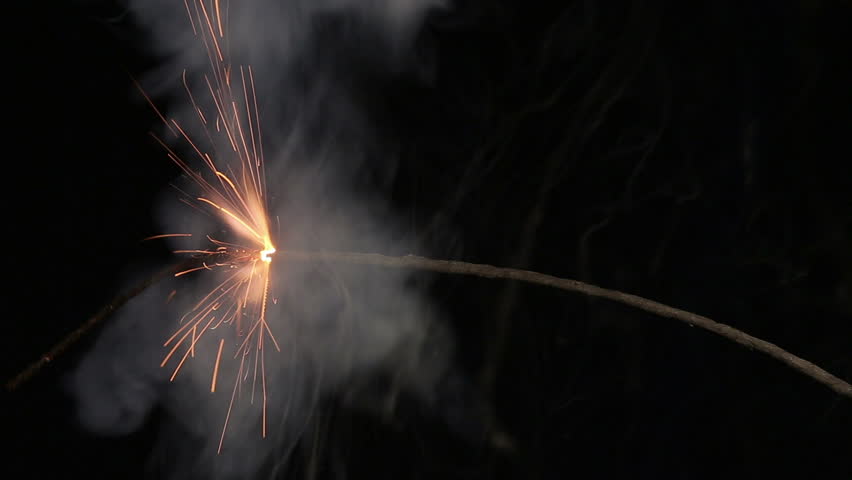
We all love fireworks, but what exactly is it that creates that incredible, colourful explosion in the night sky? What makes the explosion so controlled, so that fireworks are safe to use? And how are the different colours and effects in fireworks created? We can answer these questions and many more by looking at the chemistry of fireworks and how they are made.
The different parts of a typical firework
The first step to understanding how fireworks work is to look at the constituent parts of a typical product. For example, an aerial firework is usually made up of:
- The stick or tail. The tail, at the bottom of the firework, is used to accurately position and secure the firework before it is lit. It helps the firework fly in a straight line, in a direction and angle that the display organiser chooses.
- The fuse. Every firework needs a fuse. When ignited, the fuse starts the charge of the firework burning, igniting other smaller fuses to help all of the other effects take place during the firework’s flight. Fuses can be very simply made and lit manually, but in professional displays they tend to be quite complex – lit by electrical contacts, also known as wirebridge fuseheads, at a distance.
- The charge. This is an explosive part of the firework designed to shoot the firework into the sky, clear of spectators. It also triggers other smaller fuses which create the spectacular effects and colours.
- The head. The very top of the firework is where all the main chemical reactions take place within a firework. Once the firework is in the air, one or more effects will be set off in sequence by slow burning, time-delay fuses.
The chemical reaction
Live fireworks are essentially a number of chemical reactions happening in sequence. It all starts by adding heat, this is what provides enough activation energy to start the chemical reaction. Fireworks are packed tightly with solid chemical compounds, which burn with oxygen present in the air. This process converts them into other chemicals, release exhaust and smoke gases such as nitrogen, carbon monoxide and carbon dioxide.
A typical firework contains:
- A fuel – such as charcoal or sulphur
- Oxidisers to release oxygen – such as chlorates or nitrates
- A binder – such as a starch like dextrin
- Colourant chemicals – such as copper, barium or sodium compounds
What makes the different colours in fireworks?
As above, a number of metal compounds are used to create the colours in fireworks. You may recall school experiments which show what happens when you burn certain metals in a very hot Bunsen burner flame – they create very intense colours. For example, sodium compounds create yellows and oranges, while calcium and strontium can create vivid reds.
Physics is involved too!
In order to get the firework off the ground, physics comes into play. It’s all about Newton’s Third Law of Motion, that every action has an equal and opposite reaction – which is the same technology used to launch rockets into space. The gases expelled from the firework creates a force which pushes the firework into the air.
Want more info on how fireworks work? The experts here at 1st Galaxy are happy to answer your burning questions – just give us a call on 0115 8559000.